

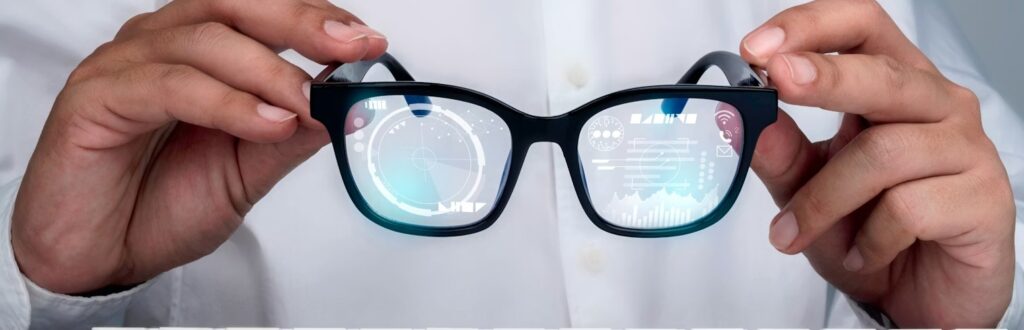
Google is preparing a serious re-entry into the smart glasses market with AI-powered eyewear slated for 2026, a decade after its original Google Glass product failed to catch on, tells The Conversation. Early versions of Glass, launched in 2013 and revised for enterprise use in 2017, were withdrawn by 2023 after limited adoption and privacy concerns. The next generation of devices is being positioned around artificial intelligence rather than simple heads-up displays, with Google promoting the products as “AI glasses” that offer more useful features and a more socially acceptable design.
Google plans two distinct models. One will provide audio-only assistance, letting wearers interact with Google’s Gemini AI assistant hands-free. The second will add a visual component, projecting information such as navigation cues or contextual AI responses into the wearer’s field of vision without the bulky form factor of past products. Early promotional materials suggest Google aims to make the glasses look and feel like normal eyewear rather than futuristic gear.
A key challenge remains social acceptability. Earlier smart glasses drew criticism and social resistance because their cameras and design made wearers stand out and raised privacy questions. More recent successful products, such as Meta’s Ray-Ban smart glasses, have taken a fashion-forward approach that frames technology as a desirable accessory first and wearable computing second.
Google’s strategy for the 2026 release includes partnering with established eyewear brands to improve aesthetics and build familiarity. The company also intends to leverage its extensive software ecosystem, including Search, Maps, and Gmail, to deliver functionality that extends beyond novelty. It’s too soon to know whether these improvements will translate into broad consumer adoption, but Google’s renewed focus reflects the growing interest in wearable AI technologies and the belief that better design and deeper AI integration could finally make smart glasses a mainstream product.
