

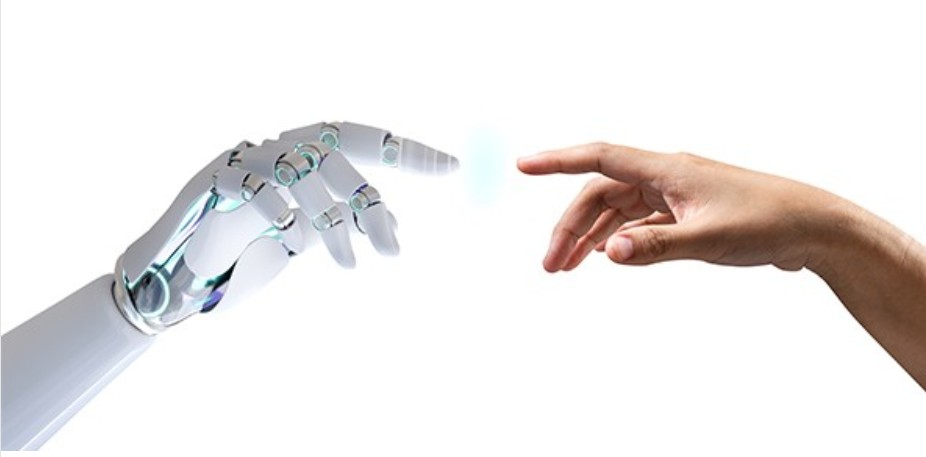
A persistent gap in robotics has been the ability to feel. While machines have advanced rapidly in vision and motion, touch remains far less developed. A new graphene-based artificial skin developed by researchers at the University of Cambridge addresses this limitation by introducing a compact, flexible tactile sensor that approaches the sensitivity of human fingertips.
The system combines graphene with liquid metal microdroplets and nickel particles embedded in a soft silicone matrix. This composite material forms a stretchable, durable surface capable of detecting multiple aspects of touch simultaneously. Unlike conventional tactile sensors, which are often bulky or limited in function, this design captures both normal pressure and tangential forces, enabling robots to sense not only how hard they are pressing but also the direction of force and the onset of slippage.
A key innovation lies in the microstructured geometry of the material. The researchers shaped the surface into tiny pyramids, some just 200 micrometers wide, inspired by the architecture of human skin. These structures concentrate stress at their tips, allowing the sensor to detect extremely small forces while maintaining a broad measurement range. This approach avoids the need for complex mechanical systems or optical components, simplifying manufacturing while enhancing performance.
The resulting sensor achieves high-resolution, three-dimensional tactile sensing in a compact form factor. It can distinguish subtle variations in texture and detect when an object begins to slip, a capability critical for delicate manipulation tasks. Such sensitivity is essential for applications where precision and adaptability are required, including robotics, prosthetics, and minimally invasive surgical tools.
By integrating advanced materials with bio-inspired design, the research demonstrates a practical path toward more dexterous and responsive machines. The work moves robotics closer to replicating the nuanced, multidimensional sense of touch that humans rely on instinctively, opening new possibilities for safer and more capable human-machine interaction.
