

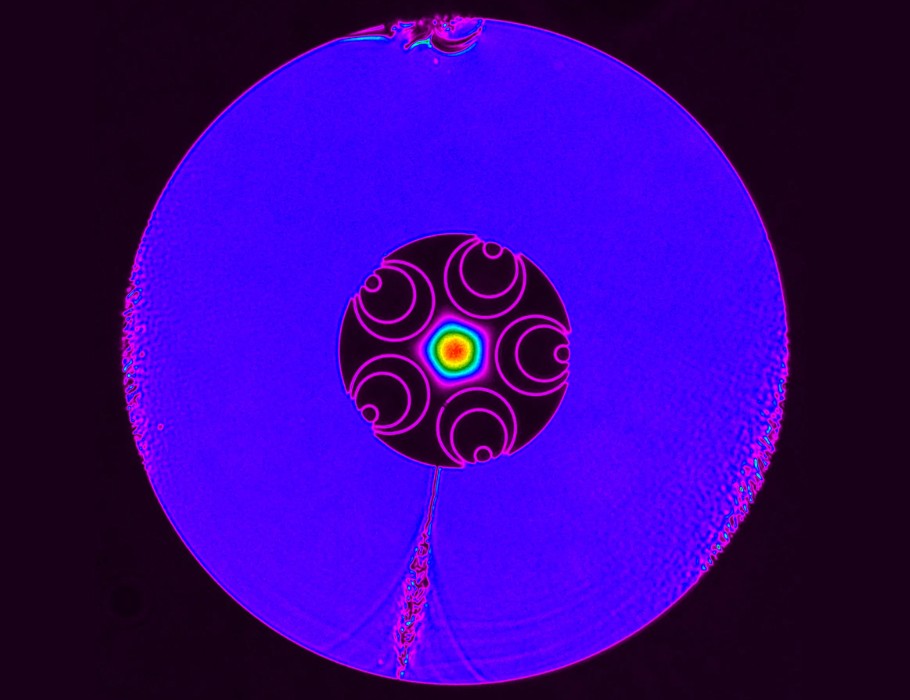
Microsoft and partners are pushing optical fiber beyond its conventional limits by hollowing out the core, letting light travel mostly through air rather than glass. That change matters: light moves faster in air and suffers less signal loss. IEEE Spectrum reports that researchers have designed a novel “double-nested antiresonant nodeless hollow-core fiber” (DNANF), which nests multiple thin glass tubes around an air core to guide light with minimal interference.
This structure confines over 99.995% of the light in the air core, reducing distortion, delay, and attenuation normally introduced by glass. In experiments, the design has achieved a 45% increase in transmission speed over conventional fiber and pushed the viable transmission distance to around 33 km, up from 15–20 km in typical fibers.
These gains come at a time when data centers and AI workloads demand ever higher bandwidth. Microsoft has already installed earlier generations of hollow-core fiber between data centers in Europe, combining them with standard fiber in hybrid routes. But widespread adoption faces challenges. The world already has over 5 billion kilometers of standard fiber, which uses mature, optimized ecosystems of connectors, splicing techniques, and amplifiers. Hollow-core fiber needs its own supporting infrastructure.
Manufacturing for long, continuous lengths of hollow-core fiber remains labor intensive and delicate. Meanwhile, competitors in China and elsewhere are developing similar technologies, and some have reported drawing continuous hollow-core fibers tens of kilometers long.
Hollow-core fiber is no longer a theoretical novelty. With improved performance and real installations underway, it’s beginning to appear as a contender for future high-speed optical networks, if the ecosystem and production hurdles can be overcome.
