

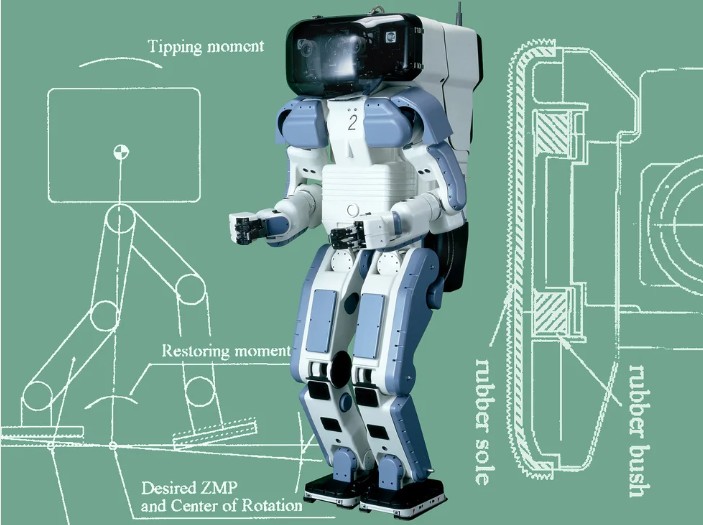
A major step in robotics history came in 1996, when Honda unveiled its P2 humanoid robot, now recognized as an IEEE Milestone for its pioneering role in achieving stable, autonomous bipedal walking. The recognition highlights not just a single machine, but a breakthrough that transformed expectations for humanoid mobility and set a foundation for modern robotics, tells IEEE Spectrum.
Before P2, most experimental robots struggled to maintain balance or required external support systems such as tethers or frames. P2 changed that paradigm. It was the first self-contained humanoid robot capable of walking on two legs with dynamic balance, using onboard power, sensors, and control systems. This autonomy marked a significant leap forward, proving that robots could move through real-world environments in a human-like way.
The robot’s technical achievements were rooted in advanced control algorithms and integrated mechatronics. Systems for posture control, gait generation, and multi-joint coordination allowed P2 to maintain stability while walking and even climbing stairs. These capabilities relied on real-time adjustments based on sensor feedback, enabling the robot to respond dynamically to changes in its environment.
Beyond its immediate capabilities, P2’s influence extended across decades of research and development. It directly informed later humanoid robots, including Honda’s own ASIMO, and established key principles still used in robotics today, such as dynamic balance control and distributed processing. Modern humanoid systems, even those incorporating advanced AI, continue to build on these foundational ideas.
The IEEE Milestone designation underscores the broader significance of the achievement. P2 demonstrated that humanoid robots could transition from laboratory concepts to functional systems capable of interacting with human environments. This shift helped shape the direction of robotics research, encouraging efforts to create machines that can assist, collaborate, and coexist with people.
Decades later, the impact of P2 remains visible. Its success not only solved a long-standing engineering challenge but also redefined what robots could be, turning stable, autonomous walking into a baseline expectation rather than an experimental goal.
