

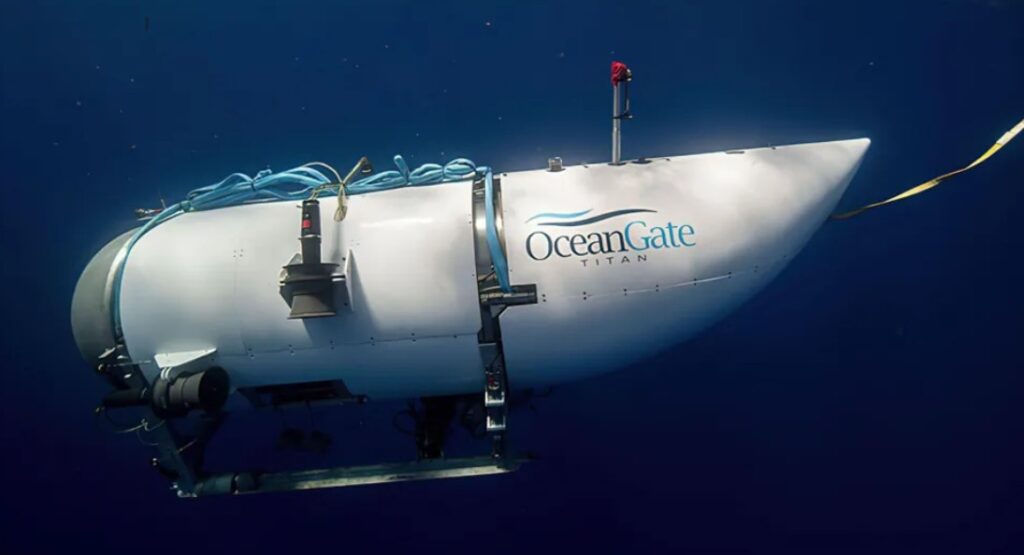
On June 18, 2023, OceanGate’s Titan submersible catastrophically imploded during its descent to the Titanic wreck, killing all five aboard, including CEO Stockton Rush. The U.S. Coast Guard’s Marine Board of Investigation’s final report, issued in August 2025, placed strong blame on Rush for insufficient oversight and failure to address safety concerns, concluding that the disaster was entirely preventable.
Key contributing factors cited include a flawed design, particularly Titan’s carbon-fiber hull, which lacked sufficient compression strength and certification. The company ignored warning signs—such as a prior hull delamination event—failed to conduct proper maintenance or non-destructive testing (NDT), and operated with inadequate inspection and certification protocols. OceanGate’s toxic workplace culture, which silenced safety concerns and stifled whistleblowers, further hindered internal signaling of risk.
Moreover, OceanGate deliberately exploited regulatory loopholes—misclassifying passengers as “mission specialists” and describing expeditions as scientific ventures to avoid stricter oversight. Investigators highlighted that had Rush survived, criminal charges might have been recommended.
How CAE Software Could Have Prevented the Disaster
- Structural Simulation and Material Analysis: Finite-element analysis (FEA) could have simulated the massive hydrostatic pressures (over 4,800 psi) Titan would face, exposing weaknesses in the carbon-fiber composite before missions. Simulations could have highlighted risks, such as delamination or interface bond failure between the carbon fiber and titanium, prompting redesign or material changes.
- Fatigue and Lifecycle Modeling: CAE tools allow lifecycle simulations to predict how repeated dives, temperature fluctuations, and loading cycles degrade materials—critical for composite hulls whose performance can deteriorate over time. Detecting fatigue early could have triggered scheduled maintenance, inspections, or a redesign of the structure.
- Non-Destructive Testing Integration: CAE-driven digital twins could guide where to focus ultrasonic or other NDT scans, detecting micro-delaminations or voids before catastrophic failure. Such integration of simulation and inspection would create proactive safety checks.
- Real-Time Monitoring Validation: Titan’s patented real-time acoustic monitoring system was intended as a fail-safe, but CAE could have validated whether such systems reliably detect anomalies with sufficient lead time. Simulating failure modes in the CAE environment might have revealed the system’s limitations, emphasizing the need for passive structural integrity rather than reliance on reactive monitoring.
Overall, CAE software could have provided rigorous, simulation-based insights into Titan’s structural behavior under deep-sea conditions, flagging safety issues and guiding material and design choices. Integrating CAE into OceanGate’s design, testing, and maintenance workflows might have prevented the tragic implosion.
