

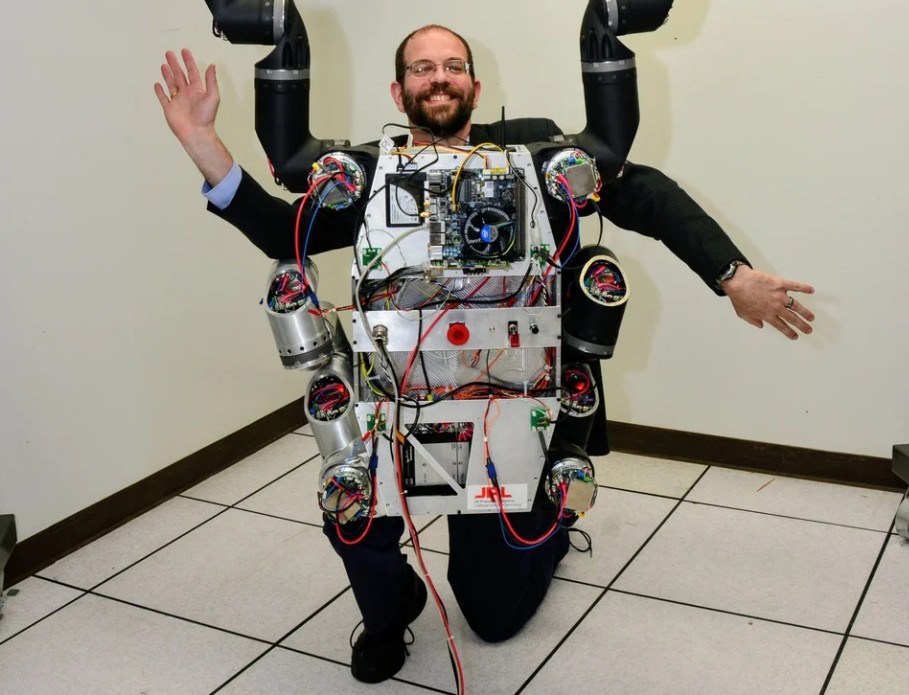
Humanoid robotics is entering a pivotal phase, driven less by mechanical breakthroughs and more by advances in artificial intelligence, says IEEE Spectrum. In an interview with Gill Pratt, the architect of the DARPA Robotics Challenge, argues that the long-anticipated moment for humanoid robots may finally be arriving, but not for the reasons many expect.
The field has made steady progress in hardware over the past decade. Robots can now walk, grasp objects, and navigate complex environments with increasing reliability. Yet, according to Pratt, the real transformation lies in their “brains.” Advances in AI, particularly in perception and pattern recognition, have allowed robots to interpret their surroundings far more effectively than before.
Despite this progress, limitations remain. Current systems largely rely on what Pratt describes as fast, intuitive decision-making, similar to human instinct. This enables impressive demonstrations but often fails in unfamiliar or unpredictable situations. True autonomy, he suggests, requires a deeper level of reasoning, where robots can model the world, anticipate outcomes, and adapt strategies in real time.
The challenge is not trivial. Moving from reactive behavior to deliberate reasoning demands new approaches to AI, including better world models and the ability to simulate actions before executing them. Without this capability, robots struggle to handle edge cases, which are common in real-world environments.
Pratt also cautions against inflated expectations. While recent advances have generated excitement, the gap between controlled demonstrations and reliable deployment remains significant. This echoes lessons from earlier robotics initiatives, where progress often appeared rapid before encountering practical constraints.
Even so, the trajectory is clear. As AI systems continue to improve, humanoid robots are becoming more capable of working alongside humans in industrial and service roles. The combination of physical adaptability and increasingly sophisticated intelligence positions them as versatile tools for environments designed around human interaction.
The broader takeaway is that the future of humanoid robotics will not be defined by lifelike form alone. It will depend on whether machines can think, reason, and adapt with the flexibility required to operate in the real world.
