

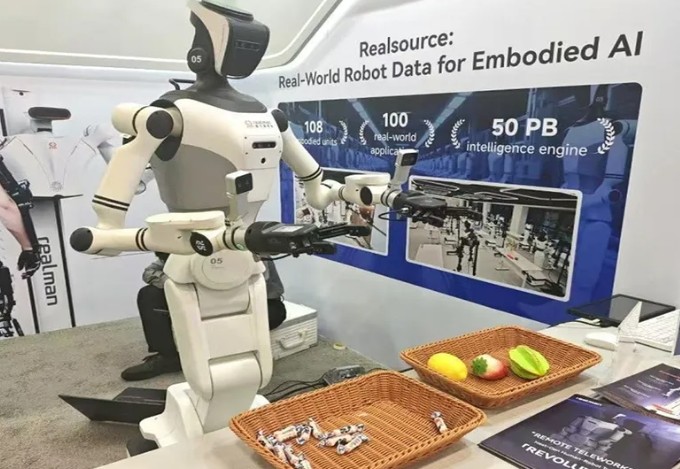
The Design News article explores the accelerating development of humanoid robots as artificial intelligence and automation technologies increasingly merge into unified systems. Rather than functioning as isolated mechanical tools, the newest humanoid robots are being designed as adaptable, AI-driven machines capable of operating in environments originally built for humans. The article presents this transition as a major shift in industrial automation, where software intelligence and physical robotics are beginning to evolve together.
A central focus of the article is the growing role of generative AI and large language models in robotics. These systems allow humanoid robots to interpret commands, process environmental information, and make decisions with greater flexibility than earlier industrial machines. Instead of relying entirely on rigid preprogrammed instructions, humanoids are beginning to learn from data, simulation, and human interaction. This development opens the possibility of robots handling more varied and unpredictable tasks in manufacturing, logistics, and service industries.
The article notes that humanoid robots are attracting significant attention because their humanlike form enables them to use existing tools, move through conventional workplaces, and collaborate alongside human workers without requiring entirely redesigned facilities. Developers believe this compatibility could speed adoption across warehouses, factories, and industrial operations already struggling with labor shortages and rising productivity demands.
At the same time, the article emphasizes that practical deployment remains challenging. Reliable mobility, balance, dexterity, battery performance, and safety continue to present major engineering hurdles. Building robots that can consistently function in dynamic real-world settings requires advances not only in AI software but also in sensors, actuators, materials, and mechanical design. Researchers and companies are therefore focusing heavily on simulation environments and machine learning systems that allow robots to train virtually before operating physically.
The article also raises broader questions about the future relationship between humans and intelligent machines. As AI-powered humanoids become more capable, industries will need to address issues involving trust, workforce displacement, ethics, and regulation. Rather than replacing traditional automation entirely, humanoid robots may expand the range of tasks machines can perform while reshaping expectations around labor and human-machine collaboration.
Ultimately, the article portrays humanoid robotics as an early but significant step toward a future where artificial intelligence is no longer confined to screens and software but becomes physically embedded in everyday industrial and social environments.
