

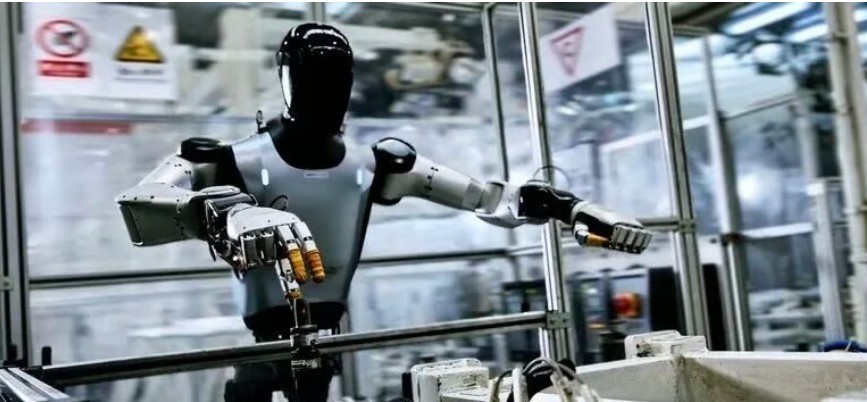
A new wave of humanoid robotics could reshape demand across the manufacturing sector, with significant implications for the foundry industry. An article in Industry Arsenal argues that the widespread adoption of humanoid robots has the potential to unlock a major growth opportunity, particularly for producers of aluminum and magnesium components.
The core of this opportunity lies in the physical requirements of humanoid robots. Unlike traditional industrial machines, these systems must balance strength, weight, and agility to function effectively in human environments. This creates a strong demand for lightweight, high-precision structural parts, which are well-suited to advanced die-casting and metal-forming processes.
If breakthroughs in software and artificial intelligence enable humanoid robots to scale into mass production, the resulting hardware demand could be substantial. Foundries capable of producing complex, high-quality castings at scale would be positioned to supply critical components for these machines. The article suggests that this shift could translate into a multi-billion-dollar opportunity, particularly in North America and Europe, where advanced manufacturing capabilities are already established.
The comparison to the electric vehicle industry is implicit. Just as EV adoption drove rapid expansion in gigacasting and lightweight materials, humanoid robots could create a similar surge in demand for specialized metal parts. Foundries that adapt early by investing in new technologies and production capacity may capture a significant share of this emerging market.
At the same time, the opportunity depends heavily on the pace of robotics development. While hardware demand could grow quickly, it is contingent on advances in AI that make humanoid systems economically viable at scale.
The article ultimately frames humanoid robotics as a potential inflection point. For foundries, it represents not just incremental growth but a chance to participate in the next major manufacturing transformation driven by intelligent machines.
