

Astronomy has just taken a quantum leap—an event that happens perhaps once a generation. My generation witnessed the launch of the Hubble Space Telescope. From its vantage point in space, Hubble delivered wondrous images of stars and galaxies so densely packed they looked like clouds. We were used to a night sky where stars seemed far apart. Suddenly, here were stars so close together and so far away that they appeared to blend into one another.
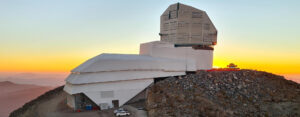
Now it’s the Vera C. Rubin Observatory, perched high in the Chilean Andes at 8,700 feet above sea level, that is reshaping our view of the cosmos. And not just astronomy—photography, too. Never before has a camera captured images with such a high megapixel count. More on that in a moment.
The New York Times reports that the Rubin Telescope has already discovered 2,100 new asteroids, even though it is still in its commissioning phase. It may have already justified its existence. One day, humanity may thank it for identifying an extinction-level asteroid that some future defense system could destroy. (Though, alas, the Golden Dome is fictional and only defends against missiles.)
The Rubin is no ordinary telescope. While it may resemble a traditional observatory from the outside, at its heart is the Simonyi Survey Telescope, an 8.4-meter (27.5-foot) reflecting telescope.
However, the real magic happens with the camera, which is unlike any other. The LSST Camera—the world’s largest digital camera for astronomy—is roughly the size of a small car. It captures 3.2-gigapixel images, making it 50 times more potent than the best professional digital cameras.
The Vera C. Rubin Observatory is designed to capture approximately 1,000 high-resolution images every day. The resulting data volume is, quite literally, astronomical (see what I did there?). Each night, approximately 20 terabytes (TB) of raw data are produced, totaling more than 7 petabytes (PB) annually.
How can so much data be managed from such a remote site? Rubin has an impressive system in place. Data from the telescope, located on Cerro Pachón in Chile, is transmitted via high-speed fiber optic cable to processing centers in Chile and the U.S.—the largest of which is the National Center for Supercomputing Applications (NCSA) at the University of Illinois at Urbana-Champaign. There, the raw images (~20 TB per night) are processed within minutes, including calibration of images, detection of moving or transient objects, and the generation of alerts (within 60 seconds). Data backups are maintained in Lyon, France.
Who benefits from all this data, besides humanity itself? Astronomers worldwide, of course. Scientists can access the data through the Rubin Science Platform—a suite of cloud-based tools and services linked to the observatory’s primary archives. Never have astronomers had such an opportunity to discover and perhaps even name a new asteroid, planet, or star.
