

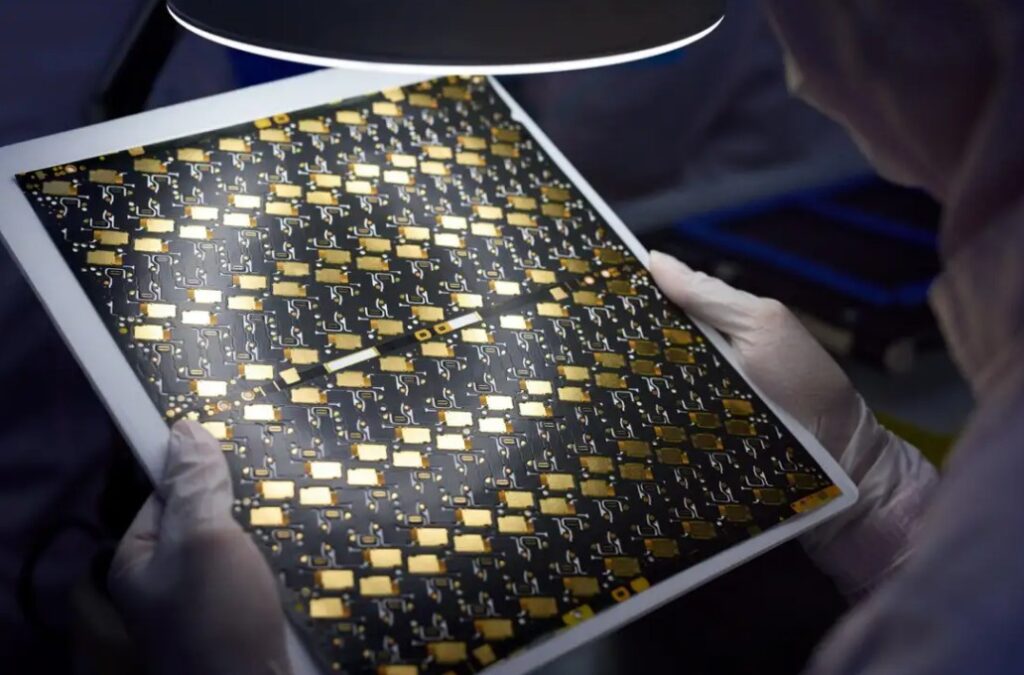
The chips inside smartphones, laptops, and other modern electronics are rarely flawless. According to the New Scientist article (full article available to subscribers), many processors sold in consumer devices contain defective sections that manufacturers intentionally disable rather than discard. Far from being a sign of failure, this practice has become a central strategy in semiconductor manufacturing, helping companies improve production yields while keeping advanced chips commercially viable.
As transistor sizes shrink into the nanometer scale, chip fabrication has become extraordinarily difficult. Tiny contaminants, manufacturing irregularities, or microscopic structural variations can render parts of a chip unusable. Instead of throwing away these partially defective processors, manufacturers test each chip after production and identify working and nonworking regions. Faulty sections are then switched off through firmware or laser fuses, allowing the remaining circuitry to function normally.
The article explains that this approach has become common across the semiconductor industry. A chip originally designed for premium devices may later appear in lower-tier products with certain cores, graphics units, or cache sections disabled. Consumers often receive slightly reduced performance, but manufacturers avoid wasting expensive silicon wafers. This process, known as chip binning or salvage, improves profitability while reducing material waste in an industry where fabrication plants cost tens of billions of dollars to build.
The growing complexity of semiconductor manufacturing makes perfect chips increasingly rare. Advanced processors now contain billions of transistors packed into areas smaller than a fingernail, leaving little margin for error. The article notes that modern computing depends not on perfection, but on engineering systems capable of tolerating imperfections without compromising reliability.
This philosophy extends beyond smartphones. Data centers, AI accelerators, and graphics processors also rely heavily on salvage techniques to maximize usable output from each manufacturing batch. Engineers design redundancy directly into chips so defective regions can be bypassed without disabling the entire processor.
Ultimately, the article presents an important shift in thinking about technology manufacturing. Rather than pursuing unattainable perfection, the semiconductor industry increasingly succeeds by designing systems that can function efficiently despite microscopic flaws. In modern electronics, controlled imperfection has become a feature rather than a defect.
