

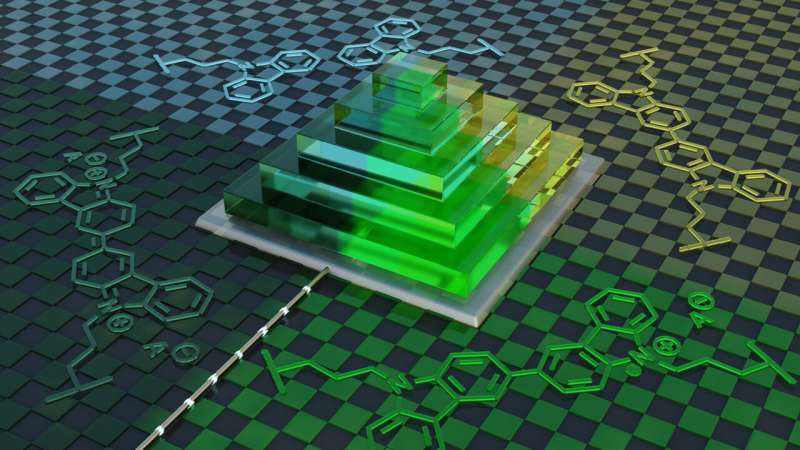
A recent study outlines how scientists formulated a unique polymer-based ink suited for additive manufacturing of membranes, enabling precise control over pore structure, geometry, and material properties. While traditional membrane fabrication relies on casting, phase inversion or stretching, this ink-based 3D-printing approach gives engineers unprecedented flexibility in tailoring membrane architecture, tells Tech Xplore.
Key to the innovation is the ink’s rheological tuning: it flows under print pressure yet rapidly sets or cures to maintain dimensional stability and fine pore features. By adjusting filament diameter, spacing, and layer height during printing, the team could directly influence porosity and flow pathways in the finished membrane. These process parameters link closely to performance metrics such as permeability, selectivity, and mechanical robustness.
In demonstration trials, the printed membranes showed competitive performance compared with conventionally fabricated equivalents, while offering novel design advantages such as graded porosity, embedded channels and geometric customization. For example, the additive route enabled structures that integrate support frameworks with the active membrane layer in a single build, a feat difficult with conventional methods. The ability to print thin, anisotropic, or hierarchical pore networks makes the approach well suited to applications such as water filtration, gas separation, or battery separators.
However, the work also acknowledges current challenges: material selection remains limited, and the long-term durability and fouling behavior of the printed membranes still require study. Moreover, scalability and cost-competitiveness relative to large-scale roll-to-roll membrane production are open questions.
For engineers in manufacturing, materials science, and process design, this ink-based 3D membrane printing signals a shift: additive manufacturing is not just for rigid prototypes, but now entering functional-membrane production. The technique allows rapid iteration, custom geometry, and integration of structure and function in one build. As the material palette expands and print throughput improves, this could become a disruptive manufacturing platform in filtration, separations, and energy-related membranes.
