

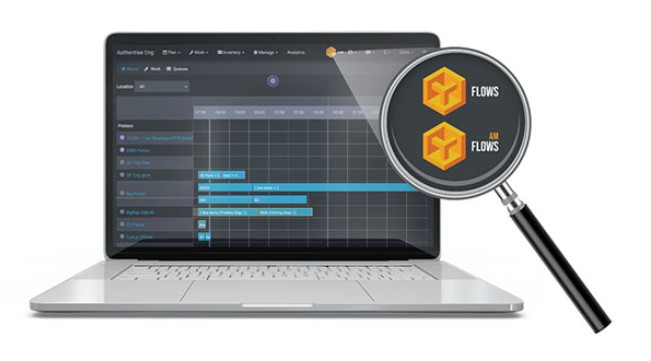
Artificial intelligence is steadily moving into additive manufacturing workflows, but its integration remains a careful balancing act between innovation and practicality. The Digital Engineering 24/7 article examines how companies are embedding AI into their processes while navigating technical and organizational constraints.
A central theme is that AI is not being introduced as a standalone solution but as an enhancement to existing tools. In additive manufacturing, AI is helping optimize design, improve build quality, and streamline production workflows. For example, it can analyze process data to predict defects, adjust parameters in real time, and support design optimization, reducing trial-and-error cycles.
However, integrating AI into these environments is not straightforward. One of the main challenges is data. Effective AI systems depend on large volumes of high-quality, well-structured data, which many organizations lack or struggle to unify across platforms. Inconsistent data formats and fragmented workflows make it difficult to deploy AI at scale.
Another challenge lies in workflow disruption. Engineering and manufacturing processes are already complex, and introducing AI requires rethinking how tools, teams, and systems interact. Companies must ensure that AI integrates smoothly with existing software ecosystems rather than forcing costly overhauls.
There is also a cultural dimension. Engineers need to trust AI-generated insights, which requires transparency and validation. Rather than replacing expertise, AI is positioned as a collaborative tool that augments human decision-making, helping engineers work faster and focus on higher-value tasks.
Vendors are responding by building more user-friendly AI capabilities directly into engineering software, lowering the barrier to adoption. The goal is to make AI feel like a natural extension of current workflows rather than a disruptive add-on.
The broader takeaway is that AI integration in engineering is less about technological capability and more about execution. Success depends on aligning data, workflows, and human expertise to create systems where AI enhances productivity without introducing new complexity.
