

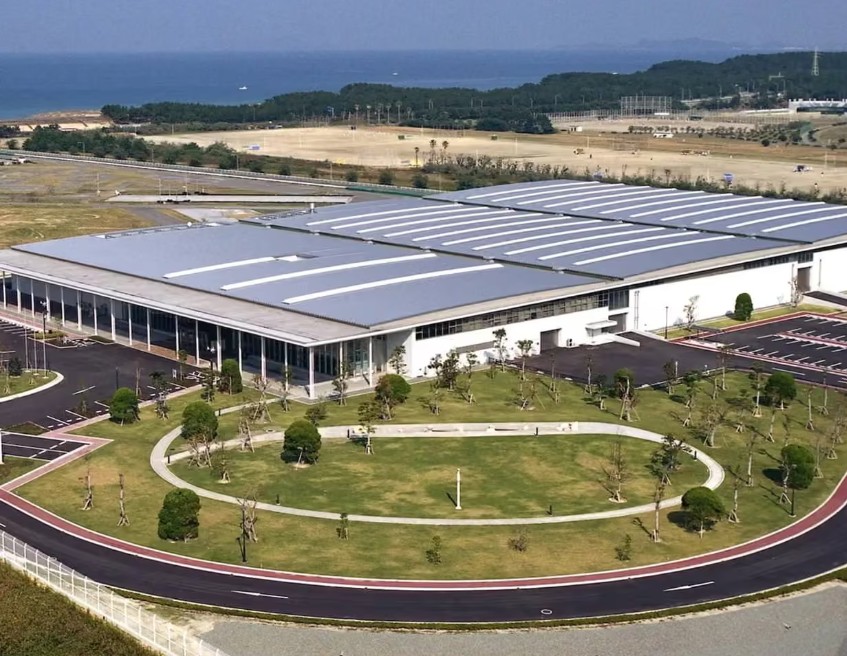
Japan has just started operating its first osmotic power plant in Fukuoka. It is only the second plant of its kind in the world, expected to generate about 880,000 kilowatt-hours per year, enough to power around 220 households or a desalination facility, tells The Guardian.
Osmotic power, also called salinity-gradient or blue energy, relies on osmosis. That natural process drives water across a semipermeable membrane from a region with low salt content to a region with higher salt content. In Fukuoka, the setup pairs fresh or treated wastewater on one side and seawater, or concentrated brine leftover from desalination, on the other. As water moves to the saltier side, the pressure builds up and can be tapped to drive a turbine and generate electricity.
This method offers a continuous, weather-independent power source. Unlike solar or wind energy, it works day and night with no interruption.
Still, technical challenges remain. A lot of the energy potential is lost while pumping water through the membrane and due to internal friction. This limits the actual energy gain. Advances in membrane materials and pump designs are gradually improving efficiency.
Internationally, this is a meaningful milestone. The first plant was built in Denmark in 2023. Smaller user-tested prototypes have appeared in places such as Norway, South Korea, Spain, and Australia. The Fukuoka project uses brine as the feed to maximize the salt concentration difference and boost output.
Osmotic power turns a natural process into a renewable energy source. While still modest in scale, its reliability and low carbon footprint give it promise. The Fukuoka facility marks a step toward proving the potential of scalable clean energy from salt water mixing.
