

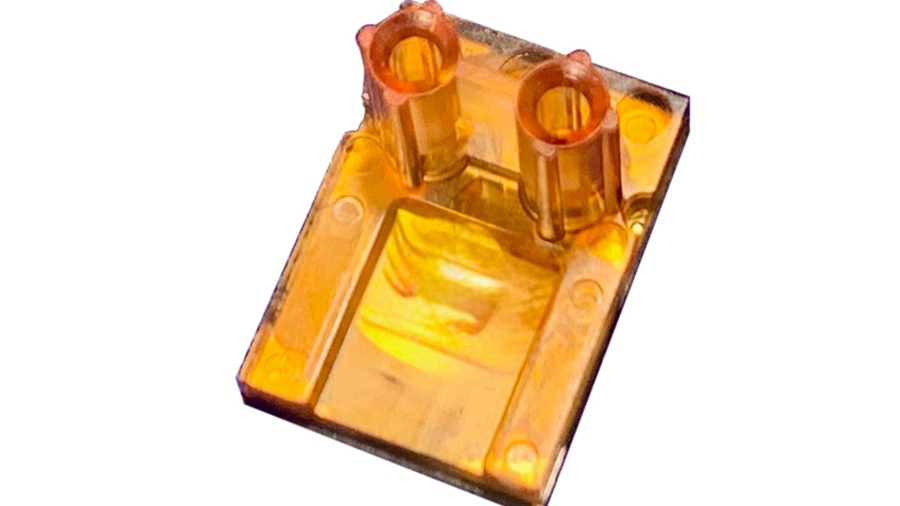
Copyright: KD
MADRID, Spain, Feb 25, 2026 – KD has signed a distribution agreement with Hitachi High-Tech Corporation to expand sales of its optoelectronic devices in Japan. Hitachi High-Tech will work with automotive Tier-1s and suppliers to evaluate optical multigigabit connectivity solutions. The agreement supports next-generation vehicle architectures that depend on high-speed data links.

Copyright: Hitachi High-Tech
Takahiro Sugihara, head of industrial & social infrastructure business said: “KD is a pioneer in high-speed in-vehicle networking. This agreement aligns well with our commitment to providing cutting-edge technologies, products, and services that support the evolution of automotive electronics and advanced mobility, in line with our corporate vision of ‘Changing the World and Future with the Power of Knowledge.’”

Copyright: KD
Óscar Ciordia, marketing and sales director of KD added: “Japan is a highly advanced automotive market with strong technology leadership across OEMs and Tier-1 suppliers. We are honored to collaborate with Hitachi High-Tech as a business partner to better serve this market. This agreement represents an important milestone and a clear signal that optical multigigabit in-vehicle connectivity is gaining momentum in Japan. The collaboration is expected to accelerate adoption of optical networking across the Japanese automotive ecosystem.”
Focus on KD7251: Integrated Optoelectronics for Automotive Networks
Under the agreement, Hitachi High-Tech will support the introduction of KD7251, an optoelectronic device for high-speed in-vehicle data transmission. The device is designed for automotive network platforms that support ADAS, infotainment, and emerging software-defined vehicle architectures.
KD7251 combines optical and electronic functionality in a single device to support multigigabit in-vehicle links. The device helps automotive system designers manage bandwidth growth, electromagnetic interference (EMI) constraints, and packaging efficiency in zonal and centralized vehicle architectures. The ASIC implements BASE-AU physical layers and complies with IEEE Std 802.3cz for automotive multigigabit optical communication over OM3 multi-mode glass fiber.
The KD7251 supports data rates of 2.5, 5, and 10 Gb/s for in-vehicle optical links. Its integrated bridging enables direct connectivity for MIPI-based sensors such as cameras and radar (CSI-2), displays (DSI-2), and AI processors via PCIe.
Source: KD
About Hitachi High-Tech

Hitachi High-Tech Corporation provides scientific instruments, analytical systems, and semiconductor manufacturing equipment for industrial and research customers. Its portfolio includes electron microscopes, inspection tools, laboratory systems, and measurement technologies. The company serves manufacturers, research institutions, and technology firms in semiconductors, materials science, healthcare, industrial infrastructure, and environmental analysis. Hitachi High-Tech was founded in 2001 through the merger of Nissei Sangyo and Hitachi Instruments. It is headquartered in Tokyo, Japan. The company operates sales and service offices across Asia, Europe, and the Americas. It also provides installation, calibration, and technical support for its equipment.
About KD

KD is a privately held semiconductor company based in Madrid, Spain, specializing in high-speed optical communication solutions for demanding environments. Its product lineup includes 1 Gb/s and multigigabit optical transceivers – such as the KD1053, KD9351, and KD7251 – designed for automotive, industrial, and consumer applications, including in-vehicle networks, smart home systems, machine-to-machine communication, advanced driver assistance systems, infotainment, and industrial IoT. Founded in the early 2010s, the company operates commercially in more than 10 countries. Its technology supports international standards such as IEEE 802.3bz, IEEE 802.3cz, and ETSI TS 105-175, reinforcing its role in advancing optical networking infrastructure. The company employs about 50 engineers and is expanding through continued R&D investment and demand in automotive and industrial markets.
