

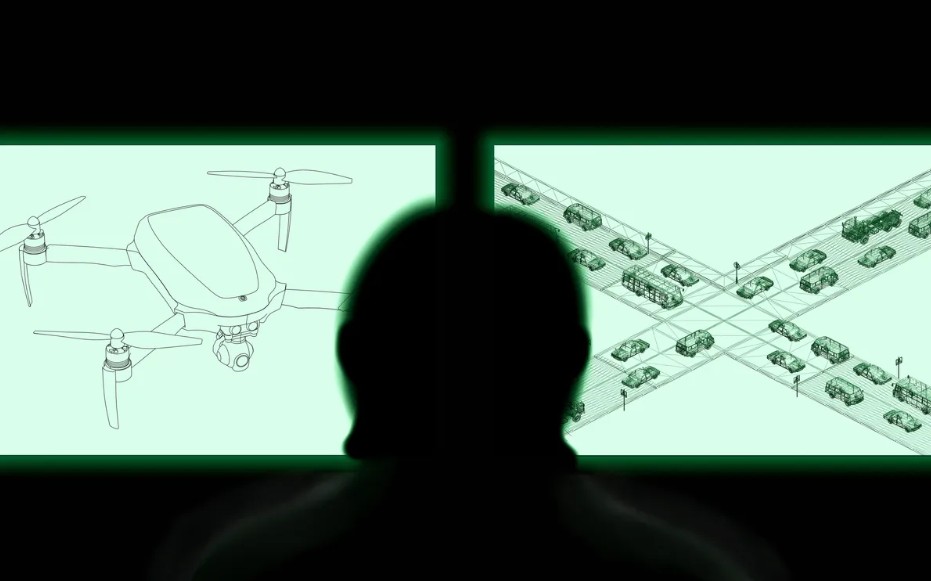
Autonomous vehicles promise safer and more efficient transportation, yet many still struggle with routine real-world situations. According to an analysis in IEEE Spectrum, decades of operational experience with military drones offer valuable lessons that could help improve the safety and reliability of self-driving cars.
Self-driving cars often fail in unpredictable environments. Construction zones, power outages, erratic pedestrians, or stalled vehicles can cause them to stop abruptly or behave unpredictably. When such failures occur, companies frequently rely on remote human operators to supervise vehicles and intervene when needed. This supervisory model resembles the approach the U.S. military adopted decades ago for unmanned aerial vehicles (UAVs).
Military drone programs in the 1980s and 1990s experienced numerous crashes and operational failures. Researchers studying those systems discovered that the problems were rarely caused by the aircraft themselves. Instead, they often stemmed from poorly designed control stations, insufficient operator training, and communication delays between the drone and the remote pilot. These insights led to a deeper understanding of “supervisory control,” in which humans monitor autonomous systems and intervene only when necessary.
The article identifies several lessons from decades of drone operations that autonomous car developers should heed. First, remote operation systems must be carefully designed to avoid operator overload. Second, communication delays can make teleoperation unreliable, especially when precise control is required. Third, training standards for remote operators must be rigorous, since human oversight remains a crucial safety layer. Fourth, system interfaces should provide clear situational awareness so operators can make quick decisions. Finally, autonomous systems must include reliable fail-safe behaviors to handle unexpected situations.
Recent incidents highlight the consequences of ignoring such lessons. For example, during a 2025 power outage in San Francisco, several autonomous taxis reportedly froze in traffic rather than performing the expected “minimum-risk maneuver” of pulling aside, blocking emergency responders.
The history of military drones shows that autonomous systems succeed not only through better algorithms but also through thoughtful human-machine interaction. As self-driving vehicles move toward widespread deployment, integrating these lessons could help prevent avoidable failures and improve public trust in autonomous mobility.
