

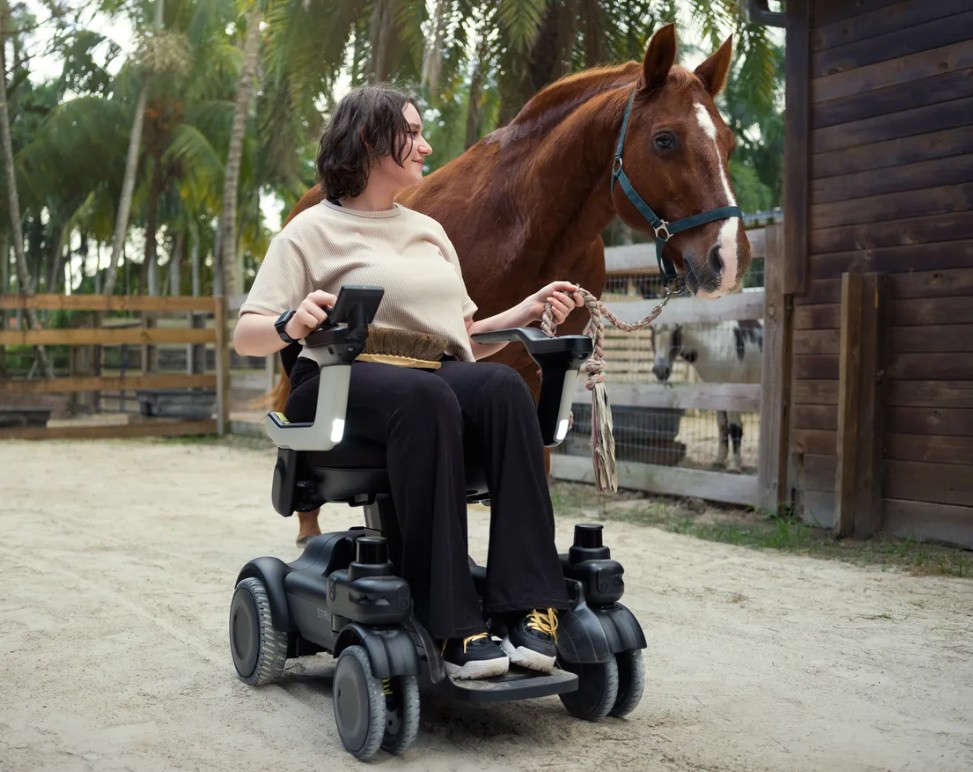
A new mobility device showcased at CES 2026 uses laser-based sensing to help wheelchair users navigate more safely in complex environments. Singapore-based startup Strutt introduced the EV1, a powered personal mobility platform that combines lidar, cameras, and real-time control to detect hazards and automatically avoid collisions, tells IEEE Spectrum. Unlike conventional powered wheelchairs that depend solely on joystick or manual control, this system blends user input with sensor-guided intervention so that it can correct or halt dangerous motion. Strutt calls this shared control, where the user defines a destination or general direction, and the sensors manage obstacle avoidance.
LiDAR, an acronym for light detection and ranging, sends laser pulses and measures their return time to create a 3D map of the surroundings. This gives vehicles and robots accurate depth and distance data to spot objects and terrain features. The EV1 uses that spatial awareness to sense obstacles indoors and outdoors and steer the device clear of them without cloud connectivity or external processing. All perception, planning, and motion decisions occur on the device itself, protecting user privacy by default since sensor data isn’t transmitted unless the user chooses. Visible indicators show when cameras and microphones are active, and wireless links are encrypted.
The device’s 600 watt-hour battery supports about 32 kilometers of travel, enough for everyday errands or neighborhood trips, with a smaller 300 watt-hour version designed to meet airline battery restrictions, providing about 16 kilometers of range. Charging from zero to roughly 80% takes about two hours.
This kind of sensor-assisted navigation reflects broader trends in assistive technology, where advanced perception systems, control algorithms, and integrated computing are being used to enhance independence for people with mobility impairments. By bringing autonomous sensing into personal mobility aids, products such as the EV1 aim to reduce the physical and cognitive burden of steering while improving safety for users moving through dynamic or cluttered spaces.
