

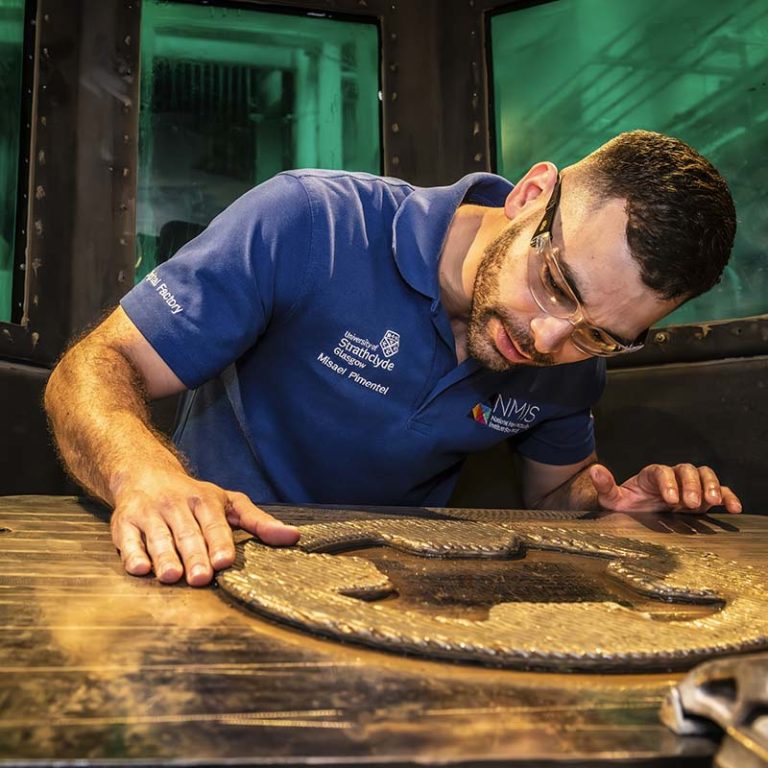
The article from Develop 3D explores how the National Manufacturing Institute Scotland (NMIS) is helping maritime companies shift from heavy, traditional ship-building methods to lightweight, sustainable manufacturing. Located on the banks of the River Clyde, NMIS serves as a bridge between academia and marine-industry firms, offering R&D support and a path to new, eco-conscious shipbuilding practices.
One of the headline projects is “Marine Vessel Lightweighting 2.0,” led by partners including Malin Marine Consultants (MMC), BAE Systems, Caley Ocean Systems, Siccar, Altair, and Hexagon Manufacturing Intelligence (HMI). The initiative aims to reduce reliance on manual fabrication and instead adopt automated, flexible, and environmentally friendly processes.
According to NMIS’ lead on direct energy deposition, the institute’s role is to help de-risk industrial innovation: essentially giving companies a safe environment to test and validate new manufacturing methods before full-scale adoption.
For the marine sector, lightweighting is more than a design tweak; it’s a response to pressure to lower CO₂ emissions, reduce fuel consumption, and make supply chains more resilient. Transitioning from heavy, manually built hulls to lighter structures using advanced manufacturing allows companies to meet stricter environmental and regulatory demands while staying competitive.
Overall, the article argues that NMIS and its network of partners may well redefine how ships are built for the future. By embracing additive manufacturing, advanced materials, and digital-manufacturing workflows, the maritime industry stands to gain in performance, sustainability, and long-term viability.
