

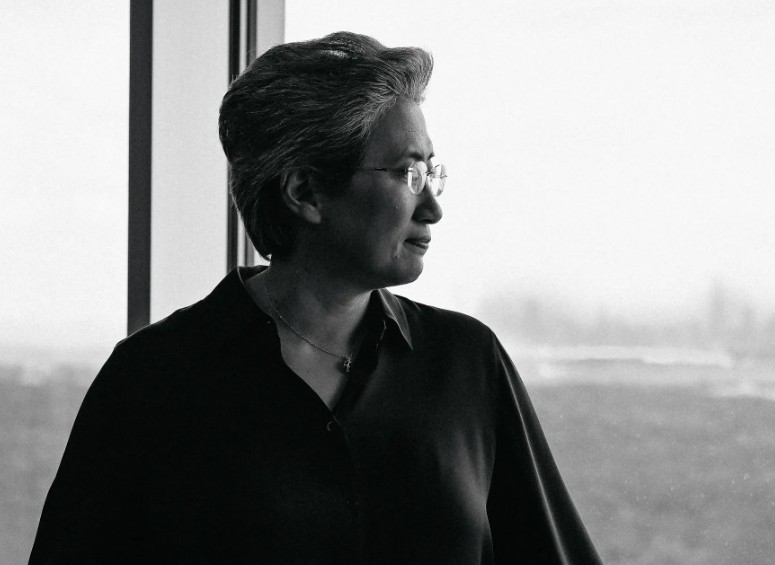
AMD’s CEO Lisa Su is a relentless, sneaker-wearing executive who has quietly but decisively turned AMD into a semiconductor powerhouse amid an intense U.S.–China tech rivalry, says this article on Wired.com.
Since taking over in 2014, Su has engineered a staggering turnaround—growing AMD’s market capitalization from just $2 billion to nearly $300 billion—by focusing on innovation, high-performance computing, modular “chiplet” designs, and major AI-focused partnerships with OpenAI, Meta, Google, and Tesla. She emphasizes strategic, incremental execution over flashy announcements and delegates with discipline, embodying a long-game mindset that contrasts with Nvidia’s more theatrical style.
Central to the narrative is AMD’s ambition to chip away at Nvidia’s dominance—especially in AI accelerators—by improving its own AI chips and software ecosystem (ROCm) while navigating policy headwinds like U.S. export controls. AMD’s newest AI chips are touted as outperforming Nvidia’s, and Su acknowledges that export restrictions—along with China’s market importance, which accounts for nearly a quarter of AMD’s business—have placed her company squarely in the crosshairs of tech diplomacy.
Su’s ambitions play out against the backdrop of the intensifying U.S.–China tech war, which is reshaping AMD’s operations. China accounts for nearly a quarter of AMD’s revenue, making it a vital yet politically sensitive market. Recent U.S. export controls on advanced AI chips, aimed at limiting China’s access to cutting-edge computing, have forced AMD to redesign products for the Chinese market. These “compliance variants” often sacrifice performance, risking both competitive positioning in China and the loss of lucrative contracts to domestic Chinese chipmakers.
Su warns that such restrictions, while intended to protect U.S. technological leadership, may instead push China to accelerate its own semiconductor development, eroding the global influence of American companies. She sees navigating these geopolitical pressures as an operational constant—one that requires balancing innovation with market access strategies.
Despite these headwinds, AMD’s latest AI chips are pitched as faster and more efficient than Nvidia’s flagship offerings, supported by a maturing ROCm software ecosystem to lure developers. For Su, outmaneuvering Nvidia means not just winning in technology, but surviving and thriving in a semiconductor landscape fractured by politics, national security concerns, and economic nationalism. Ultimately, Su emerges as a credible, steady-minded leader who balances technological ambition with geopolitical savvy—someone ready to outflank Nvidia while navigating the shifting terrain of the U.S.–China tech war.
