

Penn State materials scientists report that a specific chemical additive could improve the stability and performance of organic solar cells, a class of photovoltaics that are lighter and potentially cheaper to manufacture than traditional silicon panels. Organic cells use carbon-based materials to absorb light and convert it to electricity, but they tend to degrade much faster than silicon devices, which limits broader use. Researchers led by Assistant Professor Nutifafa Doumon and doctoral candidate Souk Yoon “John” Kim investigated whether adding a hydrocarbon-derived compound called 9,10-phenanthrenequinone (PQ) to the solar-cell structure could help address this weakness.
The team’s work, published in ACS Materials Au and featured in the journal’s “2025 Rising Stars in Materials Science” issue, shows that PQ can make organic solar cells more resilient under heat and over time. PQ substitutes for more toxic additives conventionally used in manufacturing, and it is commercially available, low-cost, and heat-tolerant. In experiments, cells with PQ retained over 93% of their original power-conversion efficiency after 180 hours of sustained heat, while cells with a common toxic additive dropped to 76% retention under the same conditions.
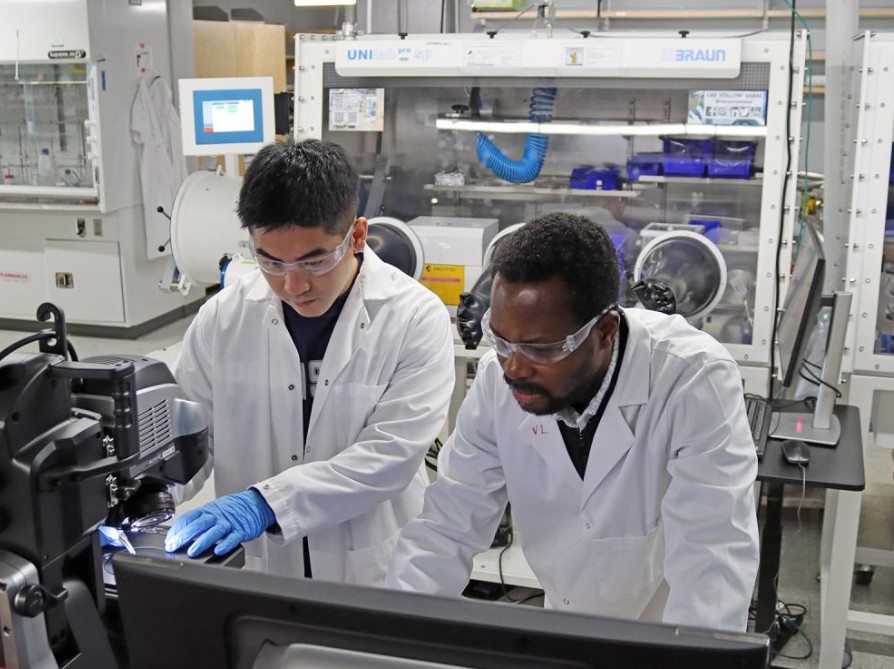
The researchers built and tested multiple cell configurations with different materials and additive combinations in the Doumon lab. They evaluated how efficiently the solar cells converted light to electricity and monitored performance over a range of temperatures and environmental conditions. PQ proved effective both in slowing degradation and in modestly improving energy-conversion efficiency compared with cells that lacked the additive.
Because organic photovoltaics could one day supply flexible or low-cost solar power where traditional silicon panels are impractical, enhancing their durability is a key step toward broader commercial viability. The team notes that PQ does not solve all limitations of organic solar cells but represents a meaningful advance. Ongoing research will explore other solid additives and broader material systems to build on these findings.
