

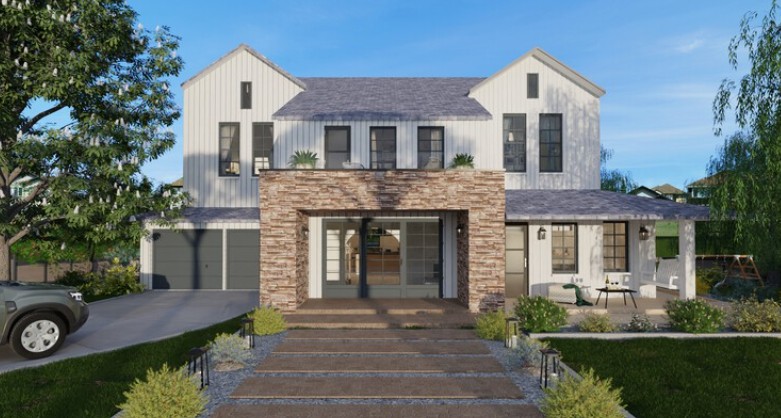
The Arch Daily article examines a persistent gap in architecture: the disconnect between professional design language and client understanding. Architectural drawings such as plans, sections, and elevations rely on abstraction, condensing complex spatial and technical information into coded representations that are not always intuitive for non-experts. This often creates tension between what is designed and what is actually understood, especially in residential contexts where clients are closely involved.
The issue is amplified when tools are misaligned with project scale. In smaller residential projects such as single-family homes or renovations, overly complex software can introduce inefficiencies, slowing down workflows and making communication more difficult. Instead of clarifying ideas, fragmented tools and disconnected processes can obscure them, creating delays and misunderstandings.
The article highlights the role of integrated platforms such as Cedreo in addressing this challenge. These tools unify 2D drawings, 3D models, and visual outputs within a single workflow, allowing designers to develop and present ideas simultaneously. Plans can be generated quickly, while 3D models evolve in parallel, enabling real-time testing of layouts, materials, and spatial configurations. This continuity reduces the need to switch between multiple programs, improving both efficiency and clarity.
A key advantage of such systems is accessibility. With shorter learning curves, they allow professionals to produce coherent presentations within hours rather than weeks. Features such as automatic generation of plans, sections, and elevations, along with integrated data such as materials and electrical layouts, ensure consistency across all representations.
Ultimately, the article argues that effective architectural communication depends not just on individual drawings, but on their alignment. Clear, consistent, and well-coordinated representations enable better dialogue between architects and clients. By simplifying workflows and integrating visualization early in the process, residential design becomes more transparent, collaborative, and responsive to user needs.
