

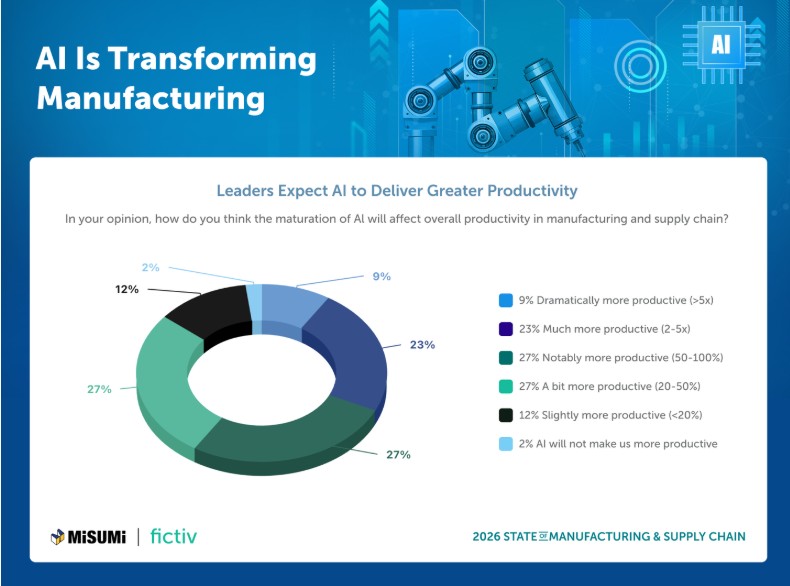
Artificial intelligence is widely recognized as essential to the future of manufacturing, yet much of the industry remains anchored in outdated tools. The Forbes article highlights a striking disconnect: while 95% of manufacturing leaders consider AI implementation vital, many organizations still rely heavily on spreadsheets for critical operations.
The issue is not a lack of awareness but a gap between ambition and execution. Spreadsheets persist because they are familiar, flexible, and deeply embedded in daily workflows. However, they create fragmented data environments, limit scalability, and make advanced analytics difficult to apply. As a result, companies struggle to transition from isolated data silos to integrated, AI-ready systems.
A key barrier is data readiness. AI depends on structured, high-quality data, but many manufacturers operate with inconsistent formats, incomplete datasets, and disconnected systems. Without a unified data foundation, AI initiatives stall at the pilot stage or fail to deliver measurable value.
Organizational factors also play a major role. Implementing AI requires rethinking processes, not simply adding new tools. Many companies attempt to layer AI onto existing workflows rather than redesigning operations around it. This approach limits impact and reinforces reliance on legacy methods.
The article emphasizes that successful adoption depends on treating AI as a core capability rather than a side project. Leading organizations are investing in integrated platforms, aligning AI with business objectives, and embedding it into decision-making processes. This shift enables real gains in efficiency, supply chain resilience, and product development.
Another challenge is cultural inertia. Employees accustomed to spreadsheets may resist change, especially when new systems require training or disrupt established routines. Overcoming this resistance requires leadership commitment and a clear demonstration of value.
The broader message is pragmatic. AI’s potential in manufacturing is substantial, but realizing it demands more than technology. It requires clean data, integrated systems, and organizational change. Until those foundations are in place, spreadsheets will continue to dominate, and the industry’s digital transformation will remain incomplete.
