

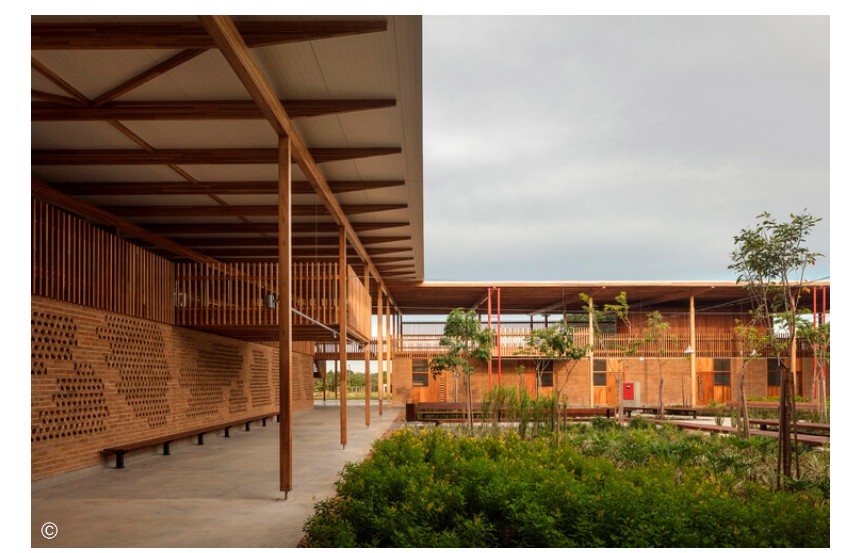
The Arch Daily article examines the enduring role of traditional building materials in shaping architecture across South America. Rather than viewing materials merely as construction resources, the article argues that materials such as bamboo, brick, wood, and concrete carry cultural memory, environmental adaptation, and local knowledge embedded within architectural practice. Across diverse climates and landscapes, these materials remain central to both historic traditions and contemporary design approaches.
South American architecture has long developed in close dialogue with local conditions. Materials available in specific regions influence structural systems, construction methods, and aesthetic expression. Bamboo and timber often appear in tropical regions, where their flexibility, lightness, and renewable qualities suit humid environments. Brick and earth construction are common in other areas, reflecting long-standing masonry traditions and craft practices passed through generations of builders and artisans.
The article highlights contemporary architectural projects that reinterpret these material traditions rather than simply replicating them. Designers combine traditional knowledge with modern construction techniques, allowing materials to remain culturally meaningful while meeting present-day architectural demands. This approach preserves the continuity of craft while encouraging experimentation and adaptation.
Projects such as community buildings, cultural centers, and educational facilities illustrate this dialogue between heritage and innovation. In many cases, architects collaborate with local labor and construction traditions, integrating vernacular techniques into contemporary architectural language. These projects demonstrate that material heritage survives not solely through preservation efforts but through continued practical use in everyday construction.
Another important theme is sustainability. Many of the materials discussed are locally sourced and require relatively low energy to produce compared with industrial alternatives. By drawing on regional materials and techniques, architects reduce environmental impact while strengthening connections between architecture, landscape, and community identity.
Ultimately, the article presents South American architecture as a practice deeply grounded in material knowledge. The persistence of traditional materials reflects a broader cultural continuity in which architecture evolves while maintaining links to the environments, histories, and communities that shape it. Through contemporary reinterpretation, these materials remain active participants in the region’s architectural future.
