

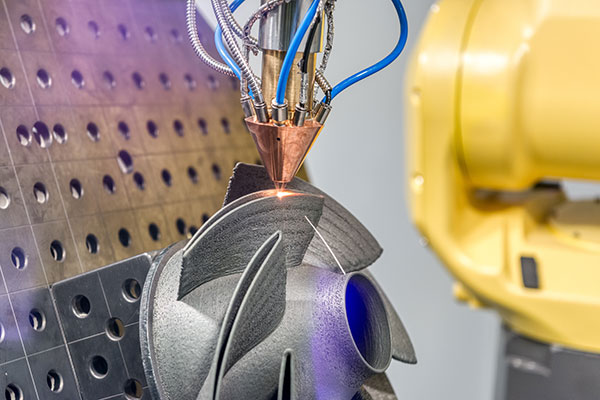
This article from Digital Engineering 24/7 offers a concise market overview and takes from industry specialists on how materials innovation is becoming a central driver of change in manufacturing technologies, particularly additive manufacturing (AM). The article spotlights how new material formulations and production methods are helping engineers push beyond the limitations of legacy materials, enabling lighter, stronger, and more functional parts that were once out of reach for both design and production teams. The pace of materials research, coupled with robust simulation and testing tools, is reshaping what’s considered possible in industrial applications.
Materials development now plays a dual role: it expands the performance envelope of AM and unlocks new markets for designers and manufacturers. As experts note, traditional polymers, metals, and composites continue to evolve with enhanced thermal, mechanical, and electrical properties. At the same time, emerging classes of materials, from high-temperature alloys to multifunctional polymers with tailored behavior, are enabling applications in aerospace, automotive, medical devices, and energy systems that demand extreme performance or complex geometry. Progress on nanocomposite and hybrid formulations, for instance, points toward components with improved strength-to-weight ratios and functionality embedded at the material level.
Alongside material innovation, the article highlights the importance of digital tools in materials development. Advanced simulation, machine learning, and data analytics help teams predict performance, optimize formulations, and accelerate qualification. These capabilities shorten development cycles and increase confidence in new materials before they’re deployed in production environments.
The roundup also reflects industry sentiment that materials breakthroughs are not just incremental enhancements but fundamental enablers of broader manufacturing transformation. As companies adopt new materials and integrate them with design-for-manufacture practices, they stand to reduce cost, improve sustainability, and expand design flexibility across sectors.
