

The chemical industry depends heavily on heat-driven separation processes that consume a large share of global energy and contribute to carbon emissions. Traditional methods boil mixtures to isolate desired compounds, which is both energy-intensive and costly. The MIT spinout Osmoses has introduced a polymer membrane technology that significantly reduces reliance on heat in industrial separations by filtering molecules with high selectivity and efficiency, tells MIT News.
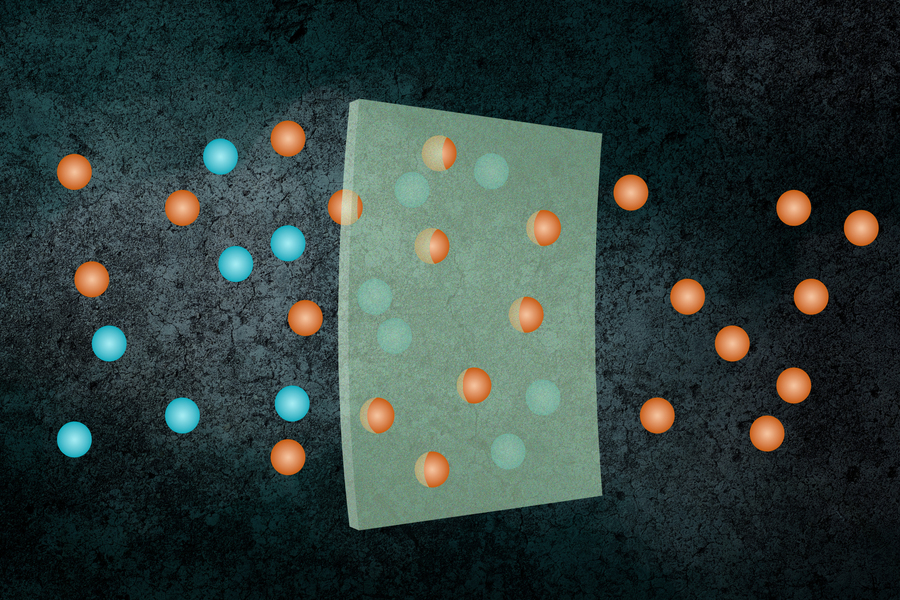
Osmoses was founded by Francesco Maria Benedetti, Katherine Mizrahi Rodriguez, Zachary Smith, and Holden Lai. The team’s membrane platform stems from research in chemical engineering and polymer science. Their membranes are designed with tiny, tunable pores that can distinguish between the smallest gas molecules, enabling precise separations without reaching the high temperatures required by conventional techniques. This can shrink the energy footprint of processes that currently account for a large portion of industrial energy use.
The company is already collaborating with industry partners to demonstrate real-world performance. One application under development is biogas upgrading, where the membrane separates methane from carbon dioxide, improving the value of renewable methane streams. Osmoses also has projects targeting hydrogen recovery at chemical facilities and helium extraction in partnership with the U.S. Department of Energy. These pilots show the potential of the technology to integrate into existing industrial infrastructure and reduce energy and operational costs.
Energy savings from replacing heat-based separations could be substantial. Studies indicate that eliminating traditional thermal distillation may reduce billions in annual energy costs and cut significant amounts of carbon dioxide emissions. Osmoses’ membranes promise a smaller physical footprint, easier retrofits at existing plants, and more efficient workflows for sectors ranging from fuels and chemicals to clean energy.
As the company scales, its membrane approach could reshape how separations are done in heavy industry, easing an energy challenge that has long resisted efficient alternatives.
