

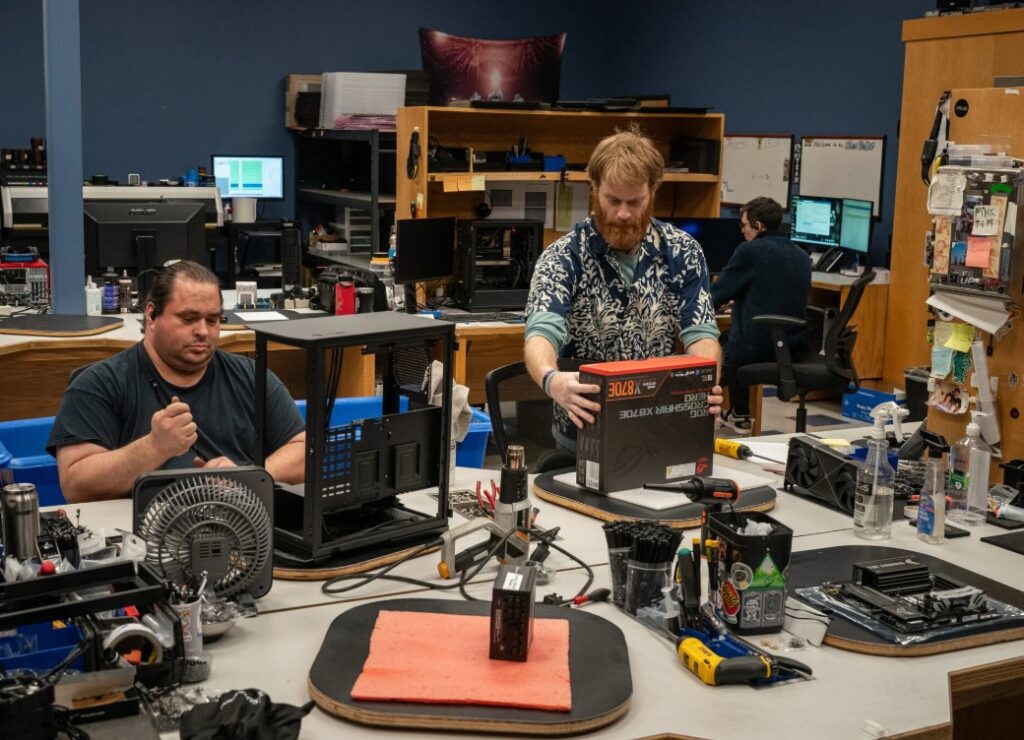
The artificial intelligence boom is reshaping the global memory chip market, driving up prices and straining supply chains far beyond data centers. Kelt Reeves, president of Falcon Northwest, has built high-end gaming PCs for more than three decades, often priced at $4,000 or more. His systems rely heavily on random-access memory, or RAM, which temporarily stores data while processors handle calculations and graphics. Since late summer, however, RAM prices have tripled as technology giants such as OpenAI, Meta, and Google expand AI data centers. Falcon Northwest has raised the price of some flagship systems to over $7,000 from roughly $5,800 to offset rising component costs, tells The New York Times.
Memory manufacturers are prioritizing higher-margin products tailored to AI workloads, including advanced versions of DRAM and high-bandwidth memory, or HBM. These chips are critical to AI systems because they allow faster data movement between processors. Nvidia, a central player in the AI hardware race, integrates stacked HBM modules alongside its AI processors to maximize performance. As demand from AI companies surges, shipments of consumer-grade memory have slowed, and prices for both RAM and NAND flash storage have climbed sharply.
Market research firm TechInsights predicts memory cost increases could raise the price of a typical PC by 23% compared with last year. Microsoft has warned that higher memory pricing may contribute to declining PC revenue. Even large manufacturers such as Dell and Apple, which negotiate long-term supply agreements, are seeing price pressures ripple through retail markets.
The memory sector, long known for boom-bust cycles, is now dominated by Samsung Electronics, SK Hynix, and Micron Technology. Micron recently exited its direct-to-consumer Crucial brand to concentrate on larger AI-focused customers, while investing billions in new fabrication plants that will not come online until 2027. In the meantime, customers are receiving only a portion of the requested supply.
For premium buyers, demand remains resilient. Falcon Northwest reported a 30% revenue increase last year. Yet budget shoppers may face higher prices and fewer options as AI’s appetite for memory continues to reshape the market.
