

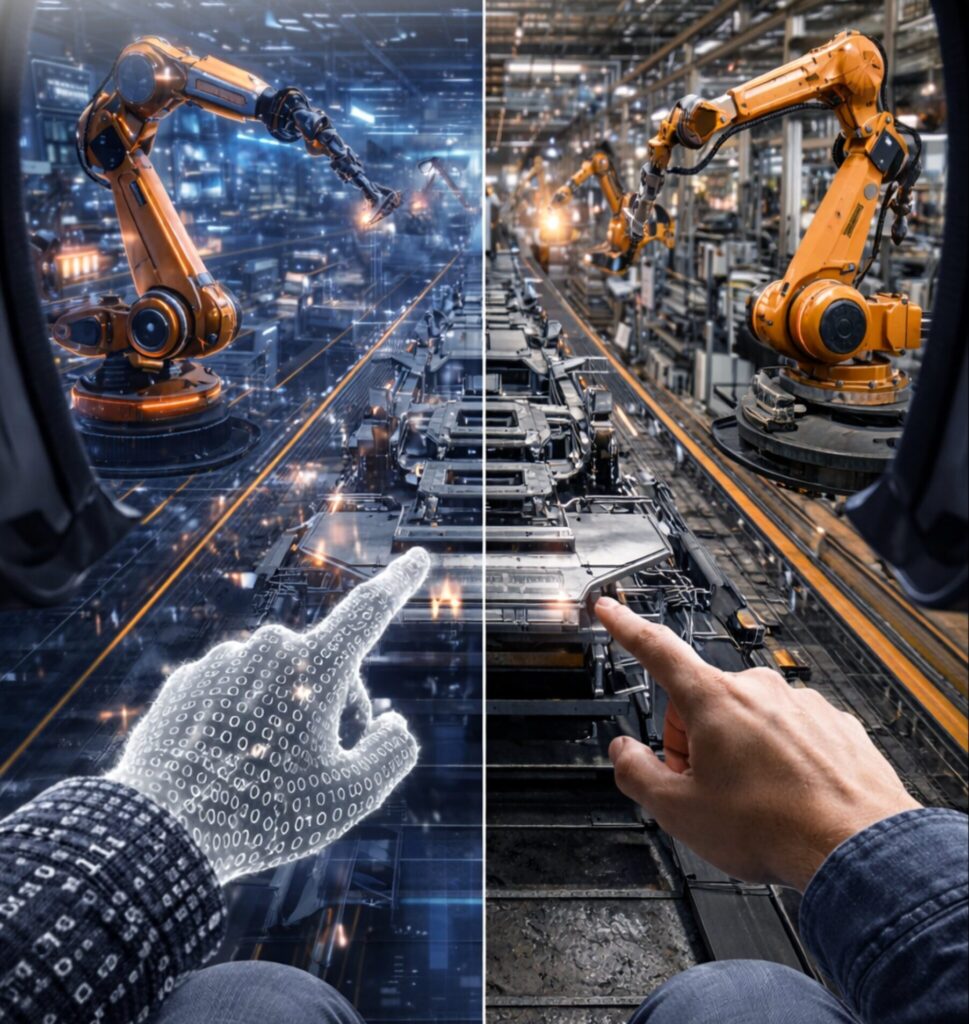
A new concept known as “metaverse manufacturing” is proposing a future industrial ecosystem where artificial intelligence, digital twins, robotics, and immersive virtual environments work together to enable highly adaptive and decentralized production. According to a report published by Tech Xplore, researchers at London South Bank University believe this approach could redefine manufacturing for the Industry 5.0 era by combining advanced digital systems with human creativity and sustainability-focused design.
The researchers describe metaverse manufacturing as more than simple digitalization. Instead, it represents a collaborative industrial framework where people, organizations, AI systems, and manufacturing technologies interact in real time across both physical and virtual environments. Digital twins, which are virtual representations of physical systems and products, would allow engineers and manufacturers to test designs, optimize workflows, and simulate performance before production begins.
The proposed ecosystem would also rely heavily on decentralized production networks, including advanced 3D and 4D printing hubs capable of producing goods locally and on demand. Researchers suggest this could reduce dependence on centralized supply chains while improving resilience during crises such as pandemics or geopolitical disruptions. In one example cited in the article, hospitals, researchers, and manufacturing centers could collaborate rapidly to create customized medical equipment using shared AI-driven design systems and distributed fabrication facilities.
A central theme of the research is bioinspired design. The authors argue that future manufacturing systems should mimic the adaptability, self-organization, and resilience found in natural ecosystems. Rather than operating as rigid industrial pipelines, factories and supply chains could evolve into flexible, interconnected networks capable of responding dynamically to changing conditions.
The researchers acknowledge that significant technological and organizational challenges remain. Achieving this vision would require secure metaverse platforms, expanded AI infrastructure, XR technologies, decentralized production systems, and new approaches to sustainable materials and industrial collaboration.
The broader idea reflects a growing effort to merge physical production with immersive digital intelligence, creating manufacturing systems that are more distributed, responsive, and human-centered than today’s industrial models.
