

With the semiconductor industry gearing up for expansion under acts such as CHIPS, the United States faces a looming workforce shortage; some estimates put the gap at 59,000 to 146,000 skilled workers. Traditional degree programs alone won’t solve this fast enough. This IEEE Spectrum article highlights how microcredentials, i.e., short, focused courses, are gaining traction as a tactical response.
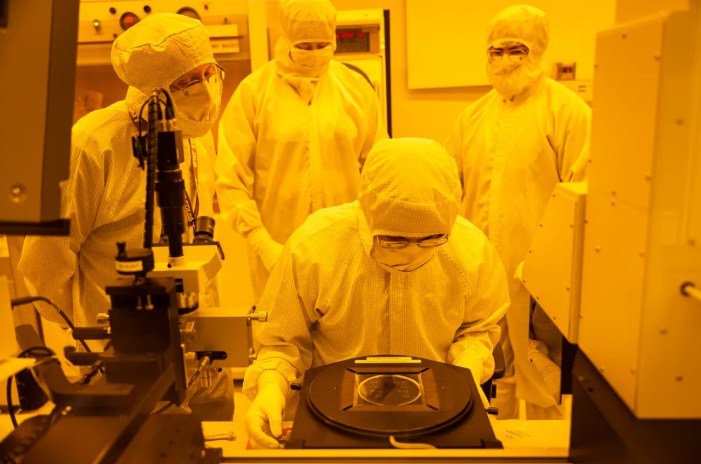
The article profiles programs at universities such as UC Santa Barbara, which opened its clean-room to students and non-students alike, offering training in lithography, etching, and other essential semiconductor processes. These courses are designed to be modular: learners can take just a few weeks of hands-on instruction to acquire skills employers value. The hope is that microcredentials lower the barrier for those shifting careers and feed into traditional engineering pipelines.
One major challenge is the lack of standardization. Because the industry lacks a uniform credentialing framework, competencies from one program may not translate to another. To address this, IEEE and USC are collaborating on a microcredential model intended for broad recognition. The aim: a credential that signals to fabs that a person has been “in a bunny suit,” handled real wafers, and survived the clean-room environment.
Scaling is another hurdle. Clean-room access is limited, so only a handful of students can participate at a time. Universities must coordinate scheduling, instructor training, and shared curricula to expand reach. The article notes that many universities already have clean rooms, so retrofitting existing facilities and aligning them with microcredential standards may be key.
Microcredentials offer a nimble way to bolster the semiconductor talent pipeline. They won’t replace full degree paths, but they provide a practical bridge: helping new entrants, technicians, and engineers gain hands-on experience quickly in a field where demand is exploding.
