

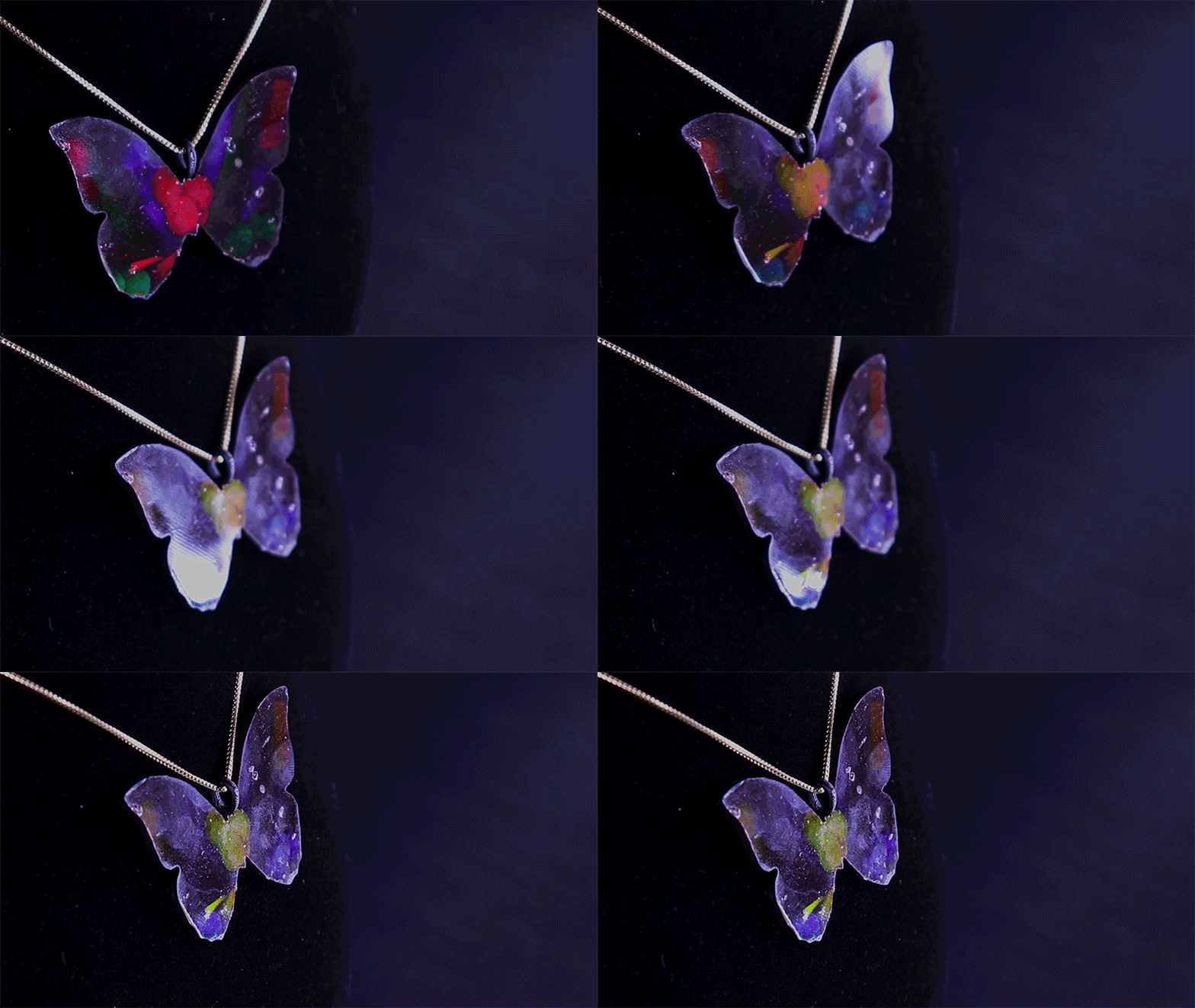
Researchers at the Massachusetts Institute of Technology have unveiled a new optical fabrication technique called MorphoChrome that lets users program vibrant, angle-dependent color on ordinary items using light, tells MIT News. Unlike traditional color, which comes from pigments, the shimmering hues seen in peacock feathers and opals arise from microscopic structures that reflect light in specific ways. Until now, producing this so-called structural color outside the lab has been difficult and expensive. MorphoChrome aims to change that by making structural color programmable and accessible.
The system combines software with a handheld device about the size of a glue bottle and a special holographic photopolymer film. Users start by picking colors on a computer interface; those choices control red, green, and blue laser diodes inside the device. As the laser light exposes the film, the system “paints” iridescent designs in real time, embedding structural color that shifts and glimmers depending on the viewing angle. Once the film is exposed, it is bonded to objects with a thin layer of epoxy and a brief ultraviolet cure, leaving behind a luminous surface that looks like gemstone-quality color.
Demonstrations include transforming a plain pendant into a jewel-like charm with multicolor glints and producing golf gloves that visually signal correct grip by shining green in response to orientation. Because the film and device are portable and fairly straightforward to operate, users from artists to product designers can experiment with iridescent effects that previously required specialized materials or chemical processes.
The research team plans to push the technology further. Future work may expand the range of colors and explore materials that support full 3D light-field effects, enabling even richer visual outcomes. Longer-term visions include encoding visual information, such as holograms, or integrating programmable structural color into soft robotics for adaptive camouflage.
MorphoChrome represents a step toward democratizing a natural phenomenon, giving makers, designers, and engineers a new tool for creating striking visual effects previously limited to nature and high-end manufacturing.
