

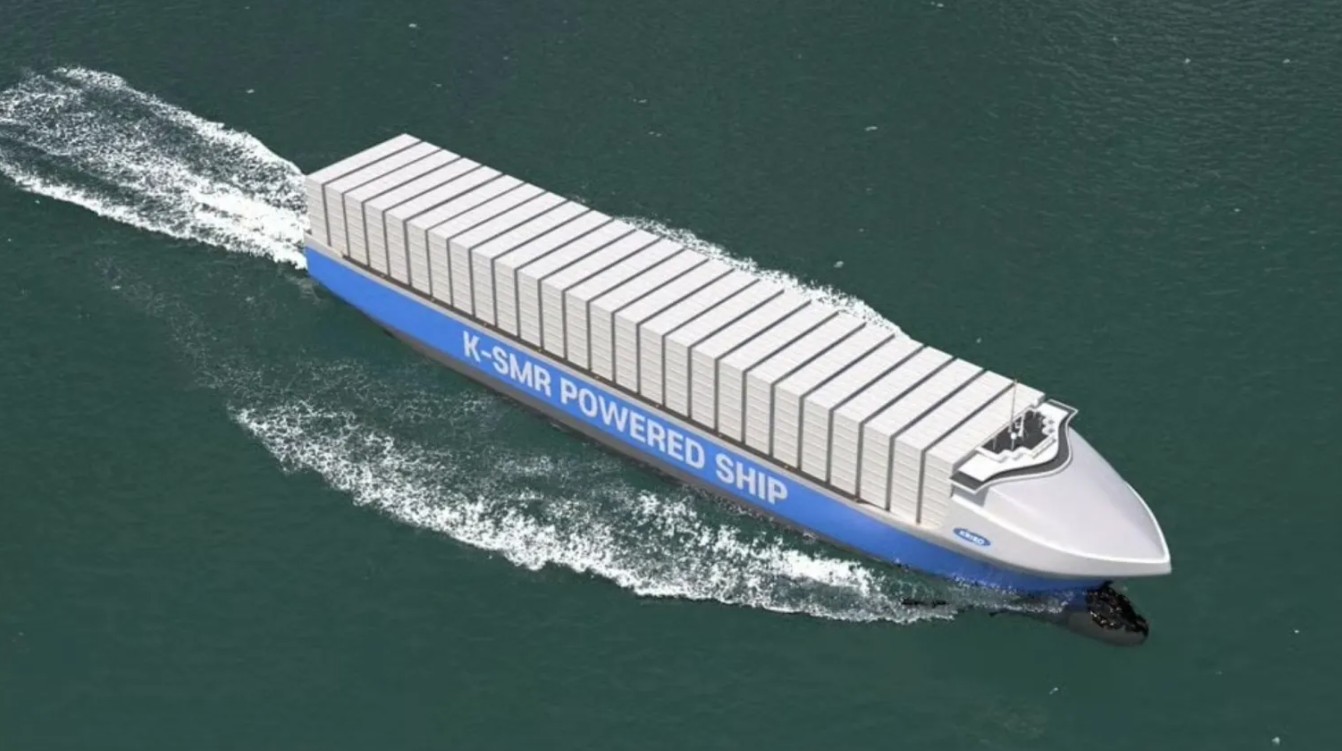
A South Korean consortium is advancing plans for a cargo ship powered by molten salt nuclear reactors, potentially offering the shipping industry an alternative to fossil fuels. The American Bureau of Shipping recently granted Approval in Principle to the vessel concept, an important step toward determining whether the technology can become commercially viable, tells Popular Science.
The proposed ship is being developed by the Korea Research Institute of Ships & Ocean Engineering, Samsung Heavy Industries, and the Korea Atomic Energy Research Institute. Powered by two molten salt reactors, the vessel could travel at 25 knots and carry as many as 15,000 twenty-foot containers.
Nuclear propulsion is already well established in military submarines and warships, but its commercial use remains limited. Conventional water-cooled nuclear reactors are large, reducing valuable cargo space. Molten salt reactors offer a different approach. They use molten salt containing fissile material such as uranium or thorium rather than conventional solid fuel rods. Heat from nuclear fission is transferred through the salt and ultimately produces steam to drive a turbine.
The Korean design would position its reactors near the center of the hull to reduce the effects of ocean movement and protect them during collisions. Radiation shielding would protect the crew. Molten salt reactors could also offer passive safety advantages. If temperatures rise excessively, expansion of the salt can help slow the nuclear reaction without requiring direct human intervention.
Economics could provide another incentive. Previous analysis suggests that avoiding heavy diesel could save a molten salt reactor-powered cargo ship about $70 million over its operating life.
The environmental argument is equally significant. Global shipping consumes about 350 million tons of fossil fuels annually and generates roughly 3% of worldwide carbon emissions. Although batteries, ammonia, and wind-assisted vessels are also being explored, molten salt nuclear propulsion could provide another path toward the industry’s net-zero emissions ambitions.
Major technical and regulatory challenges remain. Molten salt reactor technology is still developing, meaning nuclear-powered commercial shipping is promising but far from widespread deployment.
