

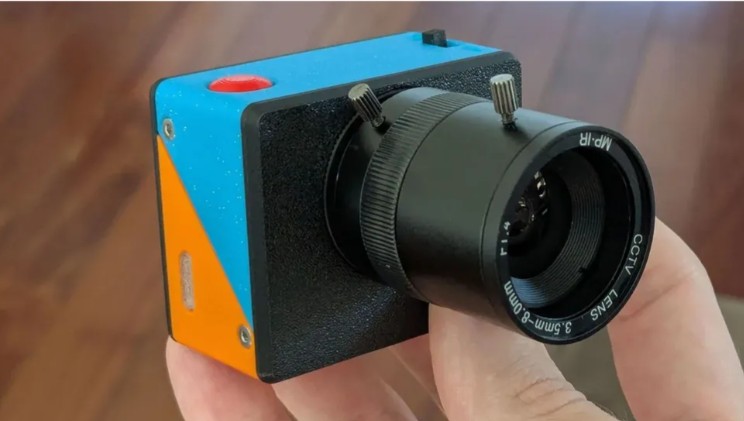
This article from Tom’s Hardware describes a DIY project by maker “Dycus” in which an optical sensor from an old computer mouse is repurposed into a working digital camera. The project used the sensor type ADNS-3090, which normally tracks a mouse’s movement, and is here re-engineered to capture images with a native resolution of just 30 × 30 pixels and 64 shades of gray.
The build took 65 hours from start to completion, including the 3D-printed camera body, electronics, buttons, screen, memory chip, and wiring for the sensor. Despite the ultra-low resolution, the project includes multiple shooting modes (single, double, quad, panorama “smear”, a quirky “cowboy” mode) and even a draw-on-screen mode using the sensor’s motion capabilities. The images have a deliberately retro, pixel-block aesthetic, akin to early video-game cameras, but the color depth (or rather shade depth) beats some earlier lo-fi builds.
The article notes that the memory is limited (32 kB), so video isn’t feasible, although still-image export via a Python script is supported. The maker draws a comparison to the Game Boy Camera, saying this sensor has fewer pixels but greater shade depth. For the engineering-minded reader, the project highlights how optical mouse sensors, which are essentially miniature image-capture devices designed to sense motion, can be hacked into actual cameras.
A compelling example of maker ingenuity, blending electronics reuse, 3D printing, firmware, and software to create a functional albeit experimental camera. It underlines how disparate components can be recombined beyond their original purpose, offering inspiration for students and engineers interested in hardware hacking, rapid prototyping, and creative design.
