

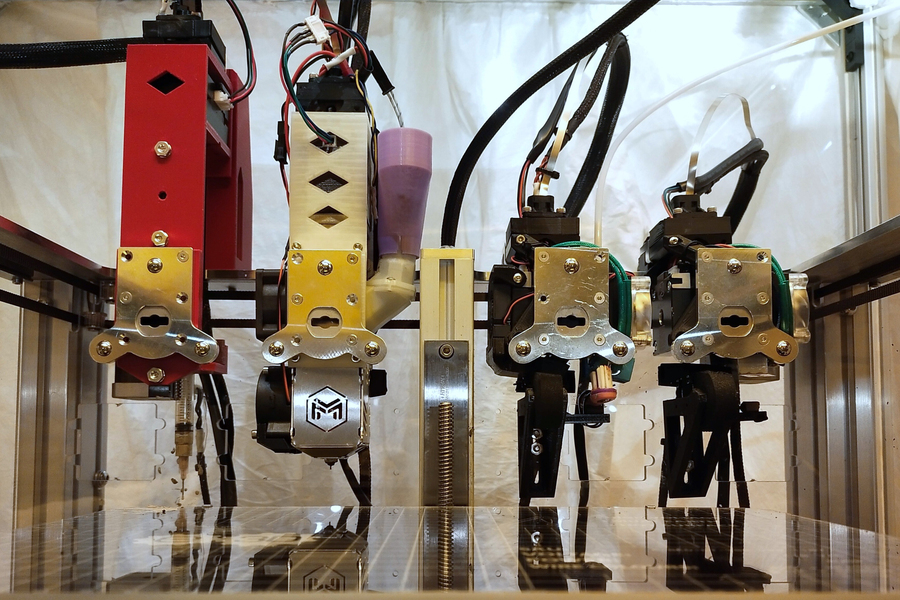
Researchers at the Massachusetts Institute of Technology have introduced a multimaterial 3D-printing platform that can fabricate complex electric machines, such as a fully functional electric linear motor, in a single printing process. Traditional manufacturing of motors and electromagnetic devices often requires multiple fabrication steps, specialized equipment, and separate assembly of conductive, magnetic, and structural parts. This new approach brings those materials and functions together in one printer, potentially transforming how custom electromechanical components are made.
The system uses four small extrusion heads that can switch between different materials, including electrically conductive filaments and magnetic inks, in a single build cycle. The ability to print multiple functional materials in a controlled way lets the platform layer conductors, magnets, and supporting structure without pausing or transferring parts between machines. In a demonstration, the MIT team printed a complete linear motor in a matter of hours and needed only one simple post-processing step before the device was operational. The performance of the printed motor equaled or exceeded that of similar devices made with conventional methods.
One advantage of this multimaterial system is speed and flexibility. Because it eliminates discrete manufacturing stages and tooling setups, engineers could produce customized electric components on demand—for robotics, electric vehicles, medical equipment, or other applications where bespoke electromagnetic devices are useful. Onsite additive fabrication of replacement motors and actuators could reduce reliance on distant suppliers and cut lead times when machines need repair or updates.
Luis Fernando Velásquez-García, a principal research scientist at MIT’s Microsystems Technology Laboratories and senior author on the paper describing the work, said the demonstration shows feasibility but is only a first step. The research appears in Virtual and Physical Prototyping, and the team sees opportunities to expand the range of printable materials and functions for broader classes of electromechanical devices.
