

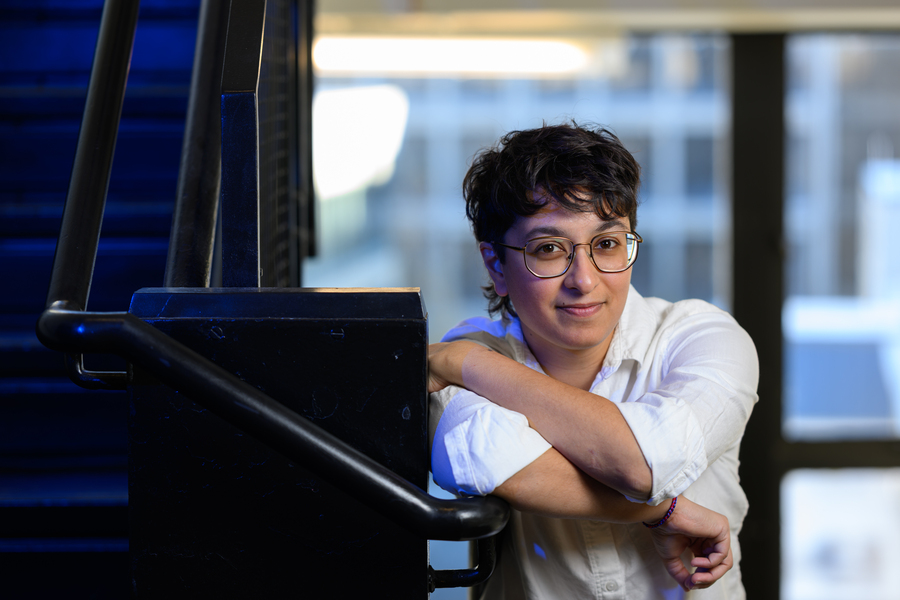
Human exploration beyond Earth faces a major obstacle: exposure to intense space radiation. MIT mechanical engineering doctoral student Palak Patel is developing nanoscale materials designed to protect astronauts and spacecraft systems from this hazard, advancing research that could enable safer long-duration missions to the Moon, Mars, and beyond, tells MIT News.
Patel’s work focuses on boron nitride nanotubes, microscopic cylindrical structures known for their exceptional strength, lightweight properties, and unique radiation-shielding capabilities. Unlike traditional spacecraft materials such as aluminum, which can produce dangerous secondary particles when struck by cosmic radiation, these nanotubes can block harmful radiation more effectively while maintaining structural strength. This combination makes them promising candidates for future spacecraft materials.
At MIT, Patel works in a research group specializing in nano-engineered composite aerospace structures. Her research involves synthesizing nanotubes and integrating them into composite materials used in aerospace engineering. By embedding nanotubes into existing composites, engineers can enhance mechanical performance while adding new functions, such as improved durability or resistance to extreme environmental conditions.
A key advance in Patel’s research is the ability to manufacture boron nitride nanotubes at far higher concentrations than previously possible. Using a specialized synthesis process developed in her lab, the materials can reach concentrations of about 50% by weight, compared with earlier limits of roughly 5–10%. Increasing the amount of nanotubes dramatically improves the material’s radiation-shielding performance without significantly increasing weight.
The research also benefits from close collaboration with NASA. Patel has received a NASA Space Technology Graduate Research Opportunities fellowship and has tested her materials at several NASA facilities. In addition, she participated in microgravity flight experiments that explored whether these nanotubes could be manufactured in space. Some of the materials she produced have already been sent to the International Space Station for further testing.
Beyond radiation protection, Patel’s broader research examines other hazards facing astronauts, including extreme temperatures and abrasive lunar dust. By combining nanotechnology, materials science, and aerospace engineering, her work illustrates how advances at the nanoscale could help solve some of the biggest challenges in human space exploration.
