

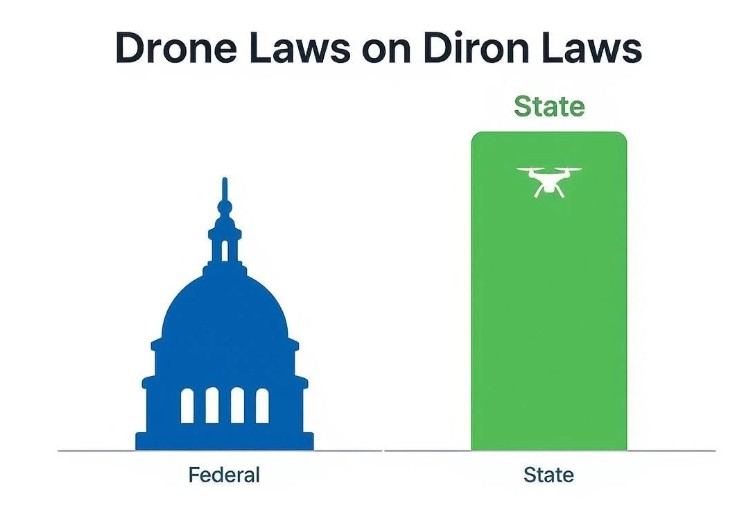
This article from DroneDesk Blog offers drone operators a clear breakdown of how federal and state regulations work together and often clash.
At the top of the regulatory pyramid sits the FAA, which governs all U.S. airspace and mandates key requirements such as Remote ID for drones, registration for any UAS above 0.55 lbs (250 g), and certification (Part 107 for commercial operators; TRUST for recreational) for pilots.
States then layer in their own sets of rules, typically about privacy, trespass, law-enforcement drone use, and operating over state-owned land. These state-specific laws do not replace the FAA rules but act as an additional legal filter.
The article includes a quick-reference table summarizing each state’s stance on: whether drone-specific legislation exists, rules for flights over state property, law-enforcement drone use, and privacy laws specific to drones. For example, California bans flying a drone to capture images of someone in a private setting without consent; Florida’s “Freedom from Unwanted Surveillance Act” prohibits using drones to capture private property or people without permission and gives property owners civil-remedy rights.
Beyond the table, the author stresses the consequences of non-compliance: federal penalties may exceed $30,000 for certain violations, and state laws may add criminal liability for trespass, illegal surveillance, or interfering with emergency-response operations.
This guide is a practical tool: it encourages due diligence before flying, especially when crossing state lines, working commercially, or flying near sensitive sites, since knowing federal rules isn’t enough; you must research the specific state laws where you operate.
