

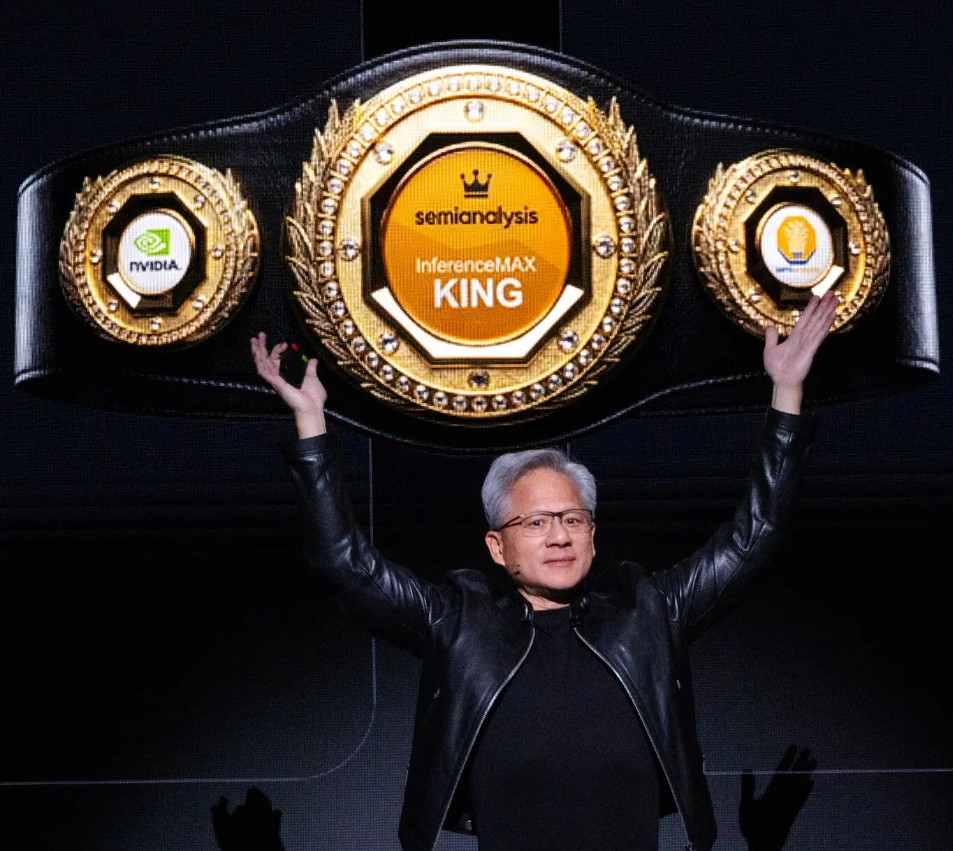
The New York Times article examines a critical transition underway at Nvidia as it adapts to rapidly changing demands in the artificial intelligence market. For years, Nvidia’s GPUs were considered the backbone of AI development, widely used for training large models. CEO Jensen Huang had long described these chips as versatile tools for building and running AI systems. However, the focus of the industry is now shifting toward inference, the phase where trained models generate outputs such as text, code, or images.
This shift places new emphasis on speed and cost efficiency. While Nvidia dominates AI training, competitors like Google and startups such as Cerebras and Groq have gained traction with chips optimized for inference. These alternatives have attracted major customers, including OpenAI and Meta, signaling a competitive challenge to Nvidia’s dominance.
In response, Nvidia has moved quickly to reposition itself. A key step is its partnership with Groq, combining Nvidia’s strengths in handling AI requests with Groq’s efficiency in executing them. This collaboration aims to accelerate inference while reducing costs, addressing one of the most pressing demands in AI deployment.
The urgency of this shift is driven by exponential growth in AI usage. As applications become more capable, they generate massive volumes of tokens, increasing the need for faster and more scalable inference infrastructure. Nvidia is also expanding its ecosystem with tools such as NemoClaw, designed to support AI agents that can perform tasks autonomously.
Beyond technology, the company is navigating supply chain constraints. By leveraging Groq’s manufacturing partnerships, including production through Samsung Electronics, Nvidia can reduce reliance on Taiwan Semiconductor Manufacturing Company and ease production bottlenecks.
Overall, the text portrays a pivotal moment. Nvidia is evolving from a dominant training-chip provider into a broader AI infrastructure company focused on inference, efficiency, and scalability, ensuring it remains central to the next phase of the AI economy.
