

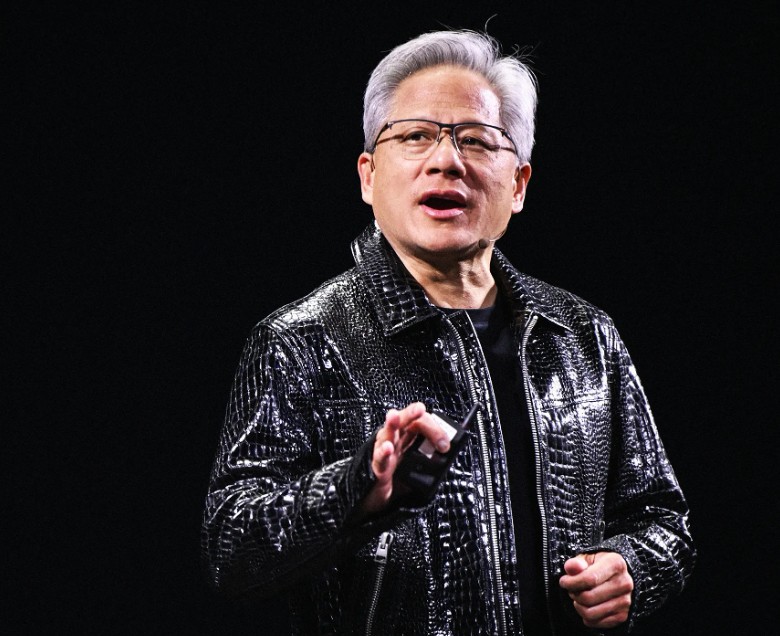
Nvidia has announced that its next-generation AI computing platform, Vera Rubin, is now in full production, signaling a major step forward for the company’s strategy in AI hardware and data center systems. CEO Jensen Huang made an announcement at CES 2026 in Las Vegas, confirming that chips based on the Rubin architecture will start shipping to customers later in the year, tells Wired.com.
Rubin represents a significant upgrade from Nvidia’s current Blackwell architecture. Built using advanced semiconductor processes and high-bandwidth memory, the platform integrates six specialized chips, including the Vera CPU and Rubin GPU, alongside high-speed networking and acceleration components that work together as a unified system. This rack-scale design is intended to support next-generation AI workloads that demand massive compute power, sustained performance, and real-time reasoning capabilities across large contexts.
Nvidia says Rubin will dramatically improve performance and efficiency compared with its predecessors. Early testing and claims from the company indicate that Rubin-based systems could use fewer chips to train large models while lowering operational costs, potentially as much as one-tenth the cost per AI token compared with Blackwell in certain scenarios.
Major cloud providers and enterprise customers are already preparing for Rubin deployments. Early adopters include Microsoft and CoreWeave, which plan to equip new data centers with Rubin systems in 2026. Software ecosystem support is also expanding, with partners such as Red Hat working to ensure enterprise tools run smoothly on the new platform.
Industry analysts view the move as crucial for Nvidia’s ongoing leadership in AI infrastructure. With AI models growing rapidly in scale and complexity, platforms such as Vera Rubin are seen as essential for enabling agentic reasoning, large-context inference, and continuous “AI factory” workloads without prohibitive energy or cost constraints.
The production milestone not only strengthens Nvidia’s position in cloud and enterprise computing but also underscores the shift in computing toward systems that can deliver intelligence at scale rather than just peak performance.
