

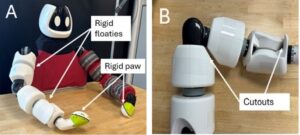
Robots do wonders in space exploration, surgery, and factory work. But when it comes to moving large, unwieldy objects, simple for humans, they stumble. That’s changing, thanks to new research from the Toyota Research Institute in Massachusetts, reports Tech Xplore.
Their robot, Punyo, mimics humans using passive compliance (a soft, body-like exterior) and active compliance (flexible joints with fine control). These features let it shoulder a large water jug and grasp a big box—tasks that require constant balancing and adjustments. Compared with a rigid robot, incorporating compliance, passive, active, or both, boosted Punyo’s success rate by an average of 206%.
Even more impressive: Punyo learned this from just one virtual demonstration. The team used example-guided reinforcement learning, one teleoperated lesson in a virtual setting, and then let the robot practice until it mastered the task.
This approach carves a clearer path toward robots that adapt like humans. Imagine lifelike robots shifting furniture, handling bulky packages in warehouses, or aiding seniors with heavy lifting—all without needing extensive programming or multiple training runs.
Punyo’s design points the way forward: soft bodies, intuitive feedback, and efficient, human-like learning mean robots could soon excel at tasks humans find easy, making them more helpful in daily life.
