

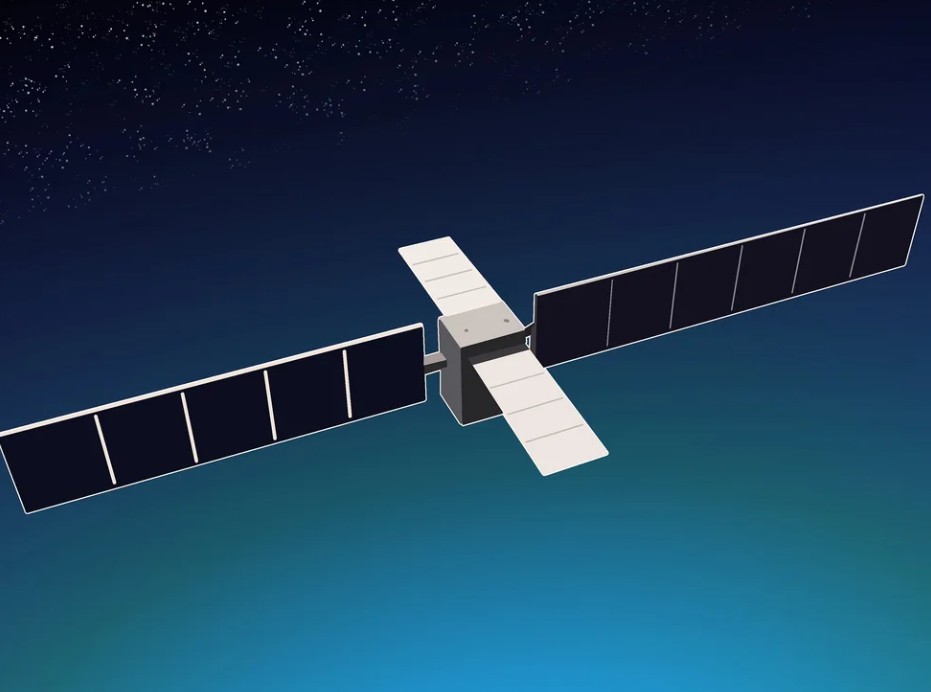
An IEEE Spectrum report explores a growing push to move AI inference workloads into space through orbital data centers powered by solar energy. The article focuses on startup Orbital, which has emerged from stealth with plans to deploy satellites equipped with GPUs capable of handling artificial intelligence inference tasks directly in orbit. The concept is driven by a mounting concern within the AI industry: Earth-based data centers are consuming enormous amounts of electricity, straining power grids and slowing expansion plans for advanced AI systems.
Orbital’s proposed system would route user requests from terrestrial data centers through ground stations to satellites operating in low Earth orbit. These satellites would communicate with one another through laser-based optical interlinks, distributing workloads across available GPUs before transmitting processed outputs back to users on Earth. The company believes this approach could eventually support large AI model providers such as OpenAI and Anthropic through API-based inference services delivered from space.
The appeal of orbital computing lies largely in energy availability. Satellites in orbit can access nearly continuous solar power without relying on overloaded terrestrial grids. The article notes that major technology figures including Elon Musk, Jeff Bezos, Jensen Huang, Sam Altman, and Sundar Pichai have shown interest in space-based data infrastructure as AI energy demands accelerate. Some researchers argue that reusable rockets and declining launch costs are beginning to make the economics less implausible than they once appeared.
Still, the engineering barriers remain severe. GPUs in space face radiation exposure that can corrupt computations through bit flips and hardware degradation. Cooling also becomes difficult because heat cannot dissipate through air convection and must instead radiate into space using specialized thermal systems. Maintenance presents another obstacle, as malfunctioning hardware cannot be easily repaired once deployed in orbit.
The article frames orbital inference not as an immediate replacement for terrestrial data centers but as a speculative extension of AI infrastructure. Whether the idea becomes commercially viable may depend less on software advances than on launch economics, thermal engineering, and humanity’s willingness to move the computational industry beyond Earth itself.
