

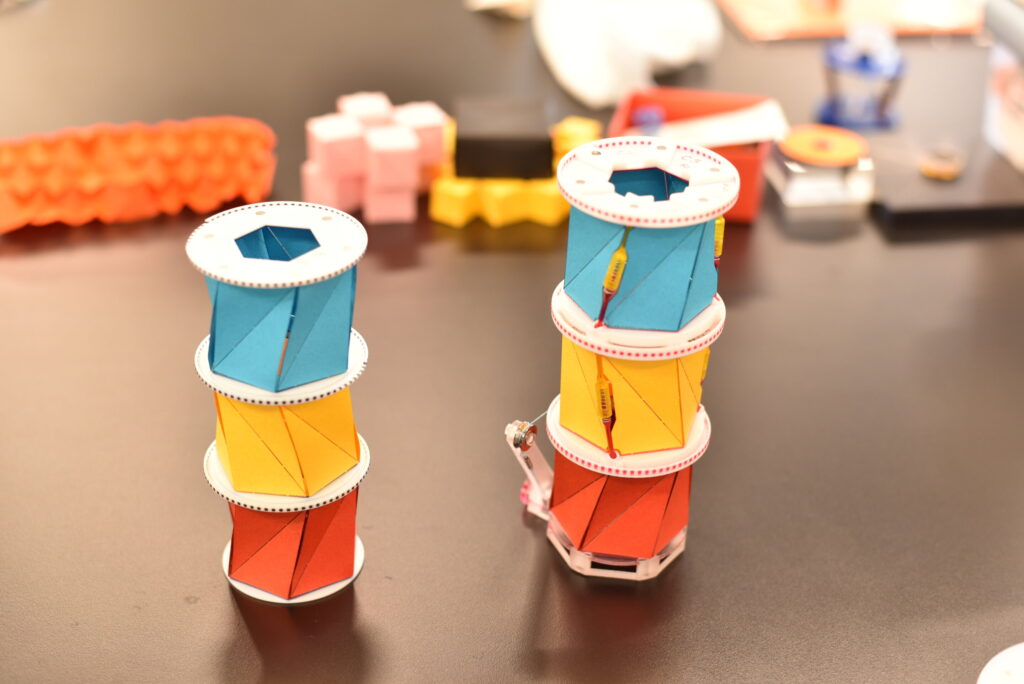
Princeton engineers led by Glaucio Paulino have redesigned origami from static art into adaptive mechanics. By adding elastic “springs” to cylindrical Kresling cells and applying geometric frustration, deliberately limiting natural folding paths, they have given origami the ability to change shape and stiffness in response to forces, says Tech Xplore.
The idea of geometric frustration is simple: you prevent a structure from folding as it naturally would, forcing it into new, controllable motions. The elastic components store energy in a pre-stressed state, enabling precise reactions. A twisting spring, for instance, can make the structure rotate in a controlled way; an axial spring might squeeze the form down or stretch it out.
This isn’t experimental for its own sake. It opens up real-world applications. Build a prosthetic leg that stiffens for walking on flat ground but becomes more flexible when climbing stairs. Create metasurfaces, such as antennas or adaptive optics, that adjust their shape or stiffness on demand. Even passive devices, such as sunshades that open in warmer weather and close as it cools, become feasible.
The underlying message is: by embracing what was once a design flaw, i.e., frustration, engineers unlock new mechanical behaviors. This frustrated-origami toolkit could shape everything from wearable devices to aerospace components, making adaptive mechanics not just clever, but essential.
