

LAS VEGAS, NV (CES 2026) and PURCHASE, NY, Jan 7, 2026 – PepsiCo announced a multi-year collaboration with Siemens and NVIDIA to deploy digital twins and AI across plant and supply chain operations. The initiative applies digital twins to simulate and test plant and warehouse operations across a global CPG footprint, with early pilots already underway in the U.S.
Rising production and distribution demand is pushing PepsiCo to apply AI-driven process simulation and digital facility design across its operations. The approach reduces reliance on traditional expansion, which limits flexibility and slows scale-up.
“The scale and complexity of PepsiCo’s business, from farm to shelf, is massive – and we are embedding AI throughout our operations to better meet the increasing demands of our consumers and customers,” said Ramon Laguarta, chairman and CEO of PepsiCo. “Our work with Siemens and NVIDIA will help accelerate our continued journey of becoming a future-fit company, operating with agility and foresight.”
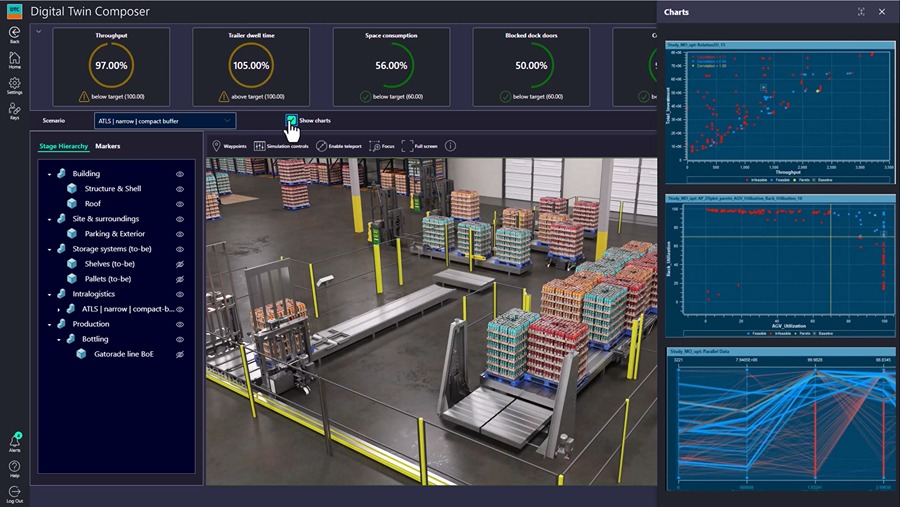
Before making physical changes, PepsiCo tests facility layouts using physics-based digital twins and AI agents acting as co-design tools. The company relies on Siemens Digital Twin Composer, built on NVIDIA Omniverse libraries, to simulate U.S. facility upgrades and plans to scale globally.
“Physical industries are entering the age of AI. For companies with real-world assets, digital twins are the foundation of their AI journey,” said Jensen Huang, founder and CEO of NVIDIA. “Working with NVIDIA and Siemens, PepsiCo is re-architecting its operations – using physically accurate digital twins and AI to reinvent how it designs, optimizes, and runs its global operations.”
“We are proud to partner with PepsiCo and NVIDIA to digitally transform their manufacturing facilities using physics-based digital twins and AI from design to engineering to operations. The Digital Twin Composer is a cornerstone in enabling PepsiCo to transform manufacturing and warehousing,” said Roland Busch, CEO of Siemens AG. “Siemens is powering the industrial AI revolution – with an unmatched industrial AI technology stack, deep domain knowhow, and world-class partners. This collaboration sets a new standard for all industries. Customers can turn ideas into real-world impact with greater speed, quality, and efficiency.”
Siemens has developed software that builds industrial metaverse environments. The platform brings together AI, simulation, and real-time data so organizations can make decisions virtually.
With Digital Twin Composer, industrial companies can unify 2D/3D digital twin models with real-time physical data in a secure, photorealistic virtual environment. Built on NVIDIA Omniverse libraries, the software supports lifecycle management of product, process, and facility data by maintaining a single high-fidelity 3D environment that combines virtual and physical information.
At select U.S. facilities, PepsiCo is using Siemens technology to build high-fidelity 3D digital twins of manufacturing and warehouse operations. The models simulate plant processes and supply chain flows to establish baseline performance. Engineering teams then validated new configurations to improve capacity and throughput. The result is a unified, real-time view of operations that can incorporate AI-driven functions over time.
PepsiCo is using Siemens’ Digital Twin Composer and NVIDIA Omniverse to digitally model machines, conveyors, pallet routes, and operator path. Computer vision and AI agents then simulate and test system changes, identifying up to 90% of issues before physical updates. Early deployments increased throughput by 20%, reduced design cycles, and delivered nearly 100% design validation. Virtual testing also reduced capital expenditure (Capex) by 10% to 15% by exposing unused capacity and validating investments before execution.
“We are deploying the first digital blueprint that reimagines how the supply chain is designed, built, and scaled, a first for the industry,” says Athina Kanioura, CEO, Latin America, and global chief strategy & transformation officer, PepsiCo. “With a unified, AI-powered digital foundation, PepsiCo is building toward a world where every plant and warehouse operates as part of a single, intelligent ecosystem. In this future, our facilities don’t just respond to demand, they anticipate and then adapt to it.”
Announcement at CES 2026
During the CES 2026 opening keynote, PepsiCo outlined the partnership applying industrial AI and digital twins to supply chain operations. The collaboration combines Siemens’ industrial software and digital twin tools with NVIDIA’s AI and visualization platforms.
Source: PepsiCo
About PepsiCo

PepsiCo is a U.S.-based food and beverage company that produces and distributes packaged snacks and drinks worldwide. Founded in 1965 through the merger of Pepsi-Cola and Frito-Lay, the company operates across multiple consumer goods categories. Its products include snack foods, carbonated soft drinks, bottled water, sports beverages, juices, and ready-to-eat foods. PepsiCo sells to retailers, wholesalers, foodservice operators, and institutional customers across consumer and commercial markets. It serves grocery chains, convenience stores, restaurants, vending operators, and other distribution channels. PepsiCo manages manufacturing, supply chain, marketing, and distribution operations across more than 200 countries and territories. The company is headquartered in Harrison, NY. PepsiCo employs about 319,000 people globally. Its portfolio includes brands across snacks, beverages, and nutrition-focused products. PepsiCo operates production facilities and logistics networks to support global consumer packaged goods distribution.
