

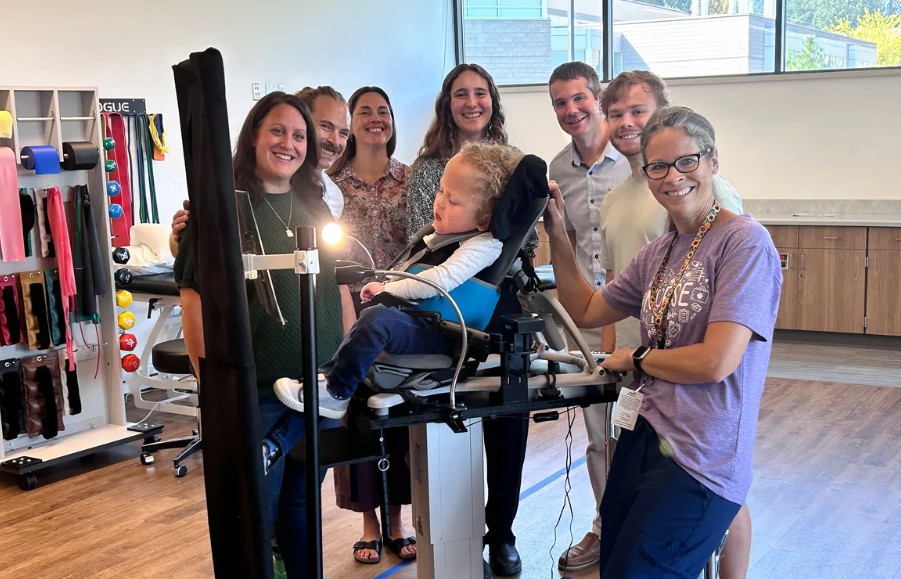
This article from IEEE Spectrum highlights recent assistive-technology projects driven by user-centered design, particularly for individuals with Cerebral Palsy (CP). One featured case involved a team at Whitworth University in Spokane, Washington. They partnered with a young boy named Ryken, who has CP along with hearing and visual impairments, to design a custom learning station suited to his educational and physical needs.
The learning station addressed key ergonomic and accessibility challenges. It featured a high-contrast black background for improved visibility, an adjustable seat height to enable interaction in different contexts, and an electric lifting mechanism adapted from a kitchen table system to match Ryken’s mobility requirements. Beyond the hardware, the project underscored the importance of engaging the user and their family from the start. The team included occupational and physical therapists, students, and family members, working together to define functional goals.
A second example in the article described an emergency communication device designed for a young adult with speech difficulties. The wearable system, a fanny pack, offered simple, tactile controls to send geolocated SMS alerts and playback prerecorded audio messages in emergencies. The design reflected direct input from the user and prioritized usability in real-world situations.
Underlying both projects is the concept of user-centered design (UCD). Instead of retrofitting existing products, UCD begins with understanding the person’s everyday context, preferences, and environment. The article argues that this approach leads to assistive technologies that are more meaningful, acceptable, and sustainable.
The article highlights a shift from generic assistive devices toward bespoke, hybrid solutions combining off-the-shelf components (3D-printed parts, power banks, mounted pistons) with custom design. It demonstrates that impactful innovation can come not only from high-budget labs but also from interdisciplinary teams and incremental design tailored to one individual’s ecosystem.
