

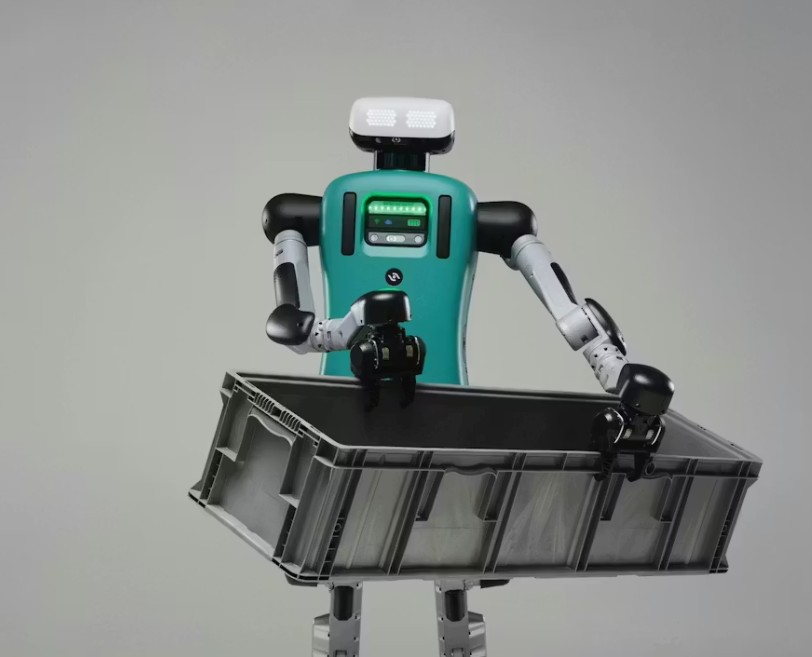
The rise of “physical AI” has pushed humanoid robots from research labs into public view, often showcased through viral demonstrations such as kung fu-performing machines. While these displays highlight advances in balance, coordination, and control, they risk overstating how close robots are to meaningful industrial deployment, tells Machine Design. The central question is no longer what robots can do in controlled environments, but whether they can deliver consistent, safe, and economically viable performance in real-world settings.
Recent progress in compute hardware, sensing, and AI models has undeniably improved robotic capabilities. Systems can now interpret complex environments, adapt motions, and perform tasks that once required precise programming. This has accelerated interest in deploying general-purpose robots across manufacturing and logistics. Yet translating these capabilities into production environments introduces a different set of challenges. Reliability, repeatability, and safety remain the primary barriers to adoption.
Unlike staged demonstrations, industrial environments are unpredictable. Robots must handle variability in materials, lighting, and human interaction while maintaining uptime and avoiding costly failures. Even minor inconsistencies can disrupt operations, making reliability more valuable than raw dexterity. Safety is equally critical, especially for humanoid systems operating alongside workers. Ensuring predictable behavior under all conditions requires rigorous validation, far beyond what current prototypes typically demonstrate.
Advances in end-effectors and sensing are helping close this gap. Tactile sensors, for example, improve grasping and manipulation when vision systems are obstructed, enabling robots to interact more effectively with physical objects. These incremental improvements, rather than dramatic demonstrations, are likely to drive near-term adoption in specific use cases.
The article ultimately argues that businesses should approach physical AI with measured expectations. Humanoid robots may evolve into valuable tools, but today’s systems are best suited for narrowly defined tasks where reliability can be guaranteed. The spectacle of agile, humanlike movement signals technological progress, yet practical deployment will depend on engineering discipline, system integration, and a clear return on investment.
