

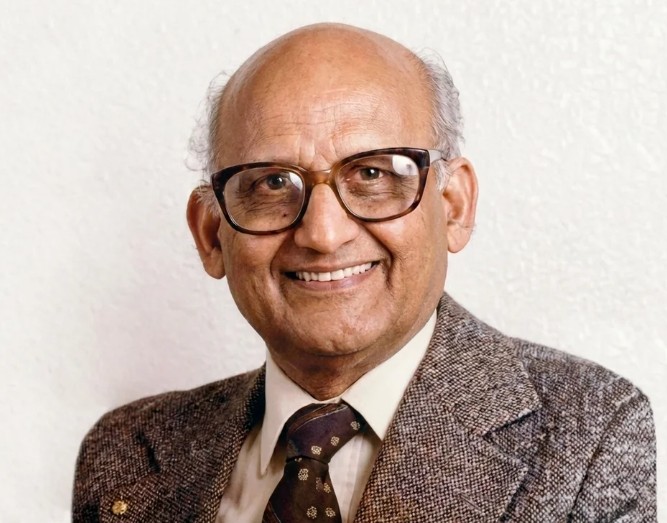
MVK Chari, an IEEE Life Fellow and a pioneer in finite element field computation, died on 3 December at age 97. Over a career that bridged industry and academia, Chari advanced techniques for analyzing nonlinear electromagnetic fields that engineers rely on for designing electric machines, says IEEE Spectrum. His work made finite element analysis (FEA) a practical tool for solving complex engineering problems by breaking down large systems into smaller elements that can be computed efficiently. The method, central to many fields of engineering, enabled solutions where exact mathematical formulas were impractical.
After earning his Ph.D. at McGill University, where he worked with numerical analysis pioneer Peter P. Silvester, Chari joined General Electric in 1970. Over 25 years at GE’s research labs in Niskayuna, New York, he built and led a team developing finite element tools for applications ranging from small motors to large MRI magnets. He also applied these methods to end region analysis of large turbogenerators, expanding FEA from two-dimensional problems to three-dimensional models. In recognition of his work, Chari received the 1993 IEEE Nikola Tesla Award for “pioneering contributions to finite element computations of nonlinear electromagnetic fields for design and analysis of electric machinery.”
Later in his career, Chari shared his expertise in academic and research roles. He taught and mentored graduate and undergraduate students at Rensselaer Polytechnic Institute, conducted research for the Electric Power Research Institute and the U.S. Department of Energy, and worked on advanced software for the U.S. Navy at Magsoft Corp. until retirement in 2016. Colleagues remember him as a guide and friend who helped launch careers and fostered the next generation of engineers. His personal story, including the origins of his lengthy given name and his cheerful character, revealed a person who combined technical insight with human warmth.
