

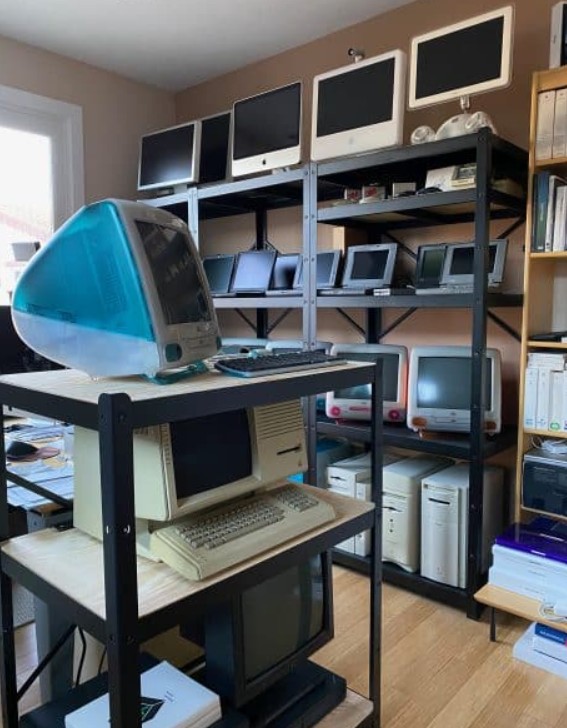
A unique archive of Apple hardware is offering a new lens on the relationship between computing and architectural practice. At the center is Neal Pann, a collector whose extensive compilation of 73 Apple machines traces the evolution of the company’s design philosophy from early systems such as the Apple Lisa to modern Mac Pro workstations, tells Architosh.com.
The collection is more than a showcase of vintage technology. It serves as a curated narrative of how Apple’s emphasis on industrial design, usability, and visual clarity resonated with architects and designers. From the beginning, Apple positioned its products as tools for creative professionals, and this alignment helped establish a lasting cultural connection with the architecture, engineering, and construction (AEC) community.
Pann’s archive highlights how successive generations of Apple hardware reflected broader shifts in professional computing. Early machines introduced graphical interfaces that transformed design workflows, while later systems emphasized performance and advanced visualization capabilities. These developments mirrored the growing complexity of architectural practice, where digital tools became essential for modeling, simulation, and presentation.
At the same time, the article underscores a persistent tension. While Apple’s hardware has consistently appealed to architects for its design and user experience, its role in AEC has often been shaped by the availability of critical software. This gap has influenced how deeply Apple platforms could integrate into professional workflows, even as the machines themselves remained highly desirable.
By framing the collection as a historical and cultural artifact, the article positions Pann as a curator of a broader story, one that connects personal computing to the evolution of architectural practice. The archive captures not just technological milestones but also the values that attracted designers to Apple in the first place.
Ultimately, the article suggests that Apple’s influence on AEC extends beyond technical specifications. It lies in the intersection of design thinking and digital tools, where aesthetics, usability, and performance converge. Through Pann’s collection, that legacy becomes tangible, illustrating how computing has shaped, and been shaped by, the needs and sensibilities of architects.
