

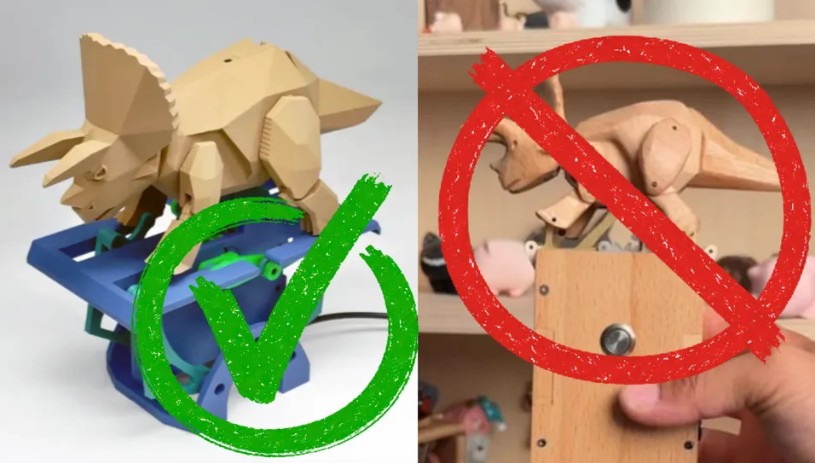
MakerWorld, the design marketplace and community operated by Bambu Lab, has launched a Creator Copyright Protection Program in response to a growing problem in the 3D printing world: unauthorized copying and resale of original designs, tells Tom’s Hardware. As 3D printing becomes more mainstream, digital files that once circulated mainly within maker communities are now ending up on global marketplaces such as Etsy and Amazon, often without the designer’s consent. This trend has frustrated creators who invest significant time and skill into their work, only to see it resold, sometimes at high prices, without compensation or credit.
The copyright protection program, now in beta, is designed to reduce that burden by offering participating designers a central reporting mechanism and procedural support to remove infringing listings across third-party sites. Access to the program requires creators to meet eligibility thresholds, for example, having at least 300 followers on the global MakerWorld platform or 100 followers on its China site, and to upload original designs exclusively to MakerWorld. Once enrolled, creators can flag instances where their work appears elsewhere without permission, and MakerWorld, along with legal partners, takes on much of the administrative process of filing complaints and coordinating takedown actions.
A key catalyst for the program was the case of a designer whose widely shared free model, Running Dinosaur Automaton, was being sold on multiple e-commerce platforms as a physical product without authorization. MakerWorld intervened on the designer’s behalf, successfully removing some offending listings and using that experience to shape the more systematic protection rollout.
Though it doesn’t eliminate all challenges—complex legal disputes may still require outside counsel, and designers must first prove originality and ownership—the initiative marks a step toward giving creators practical tools to defend their intellectual property. Early results show measurable impact, and MakerWorld plans to expand monitoring and enforcement as the program evolves.
