

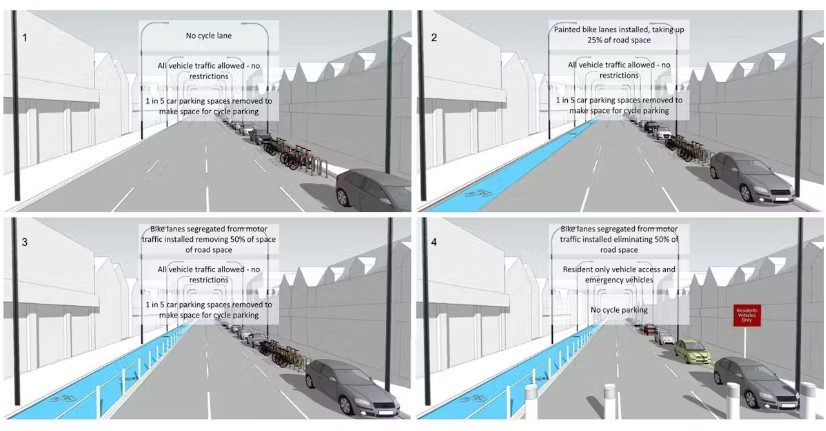
Public attitudes toward bike lanes are more complex than they often seem. New research published on The Conversation finds that visible opposition in media and protest doesn’t necessarily reflect broader public opinion. Many people, including both drivers and cyclists, are supportive of bike lanes when those lanes are well designed and introduced through transparent processes. Complaints tend to spike when infrastructure appears rushed, or there’s little opportunity for residents to give input.
Opposition often centers on fear of losing road space for cars, particularly parking, and a sense that changes to familiar traffic patterns threaten personal convenience. Some critics see bike lanes as an intrusion on their freedom to drive, a view that becomes louder when changes are framed as redistributing public space from motorists to cyclists. These reactions can be amplified in social media discourse, where negative voices may appear more dominant than they are in the wider population.
However, many supporters of bike lanes don’t express their views as vocally. They appreciate that bike lanes can make everyday travel safer, reduce conflict between cyclists and motorists, and offer alternatives to car dependence. When communities are given a meaningful role in planning, including clear explanations of expected benefits and trade-offs, support for bike lanes tends to rise. Consultation, information campaigns, and responsive design are all associated with higher acceptance and lower resistance.
The research suggests that much of the controversy around bike lanes is rooted not in people’s core preferences about mobility or urban space, but in communication and implementation. If planners engage early, address concerns about parking and traffic impacts, and show responsiveness to local needs, public backing for active-transport infrastructure tends to strengthen. This points to a wider lesson for urban policymakers: infrastructure debates often reflect process as much as substance, and trust-building can be as important as engineering in shaping public opinion.
