

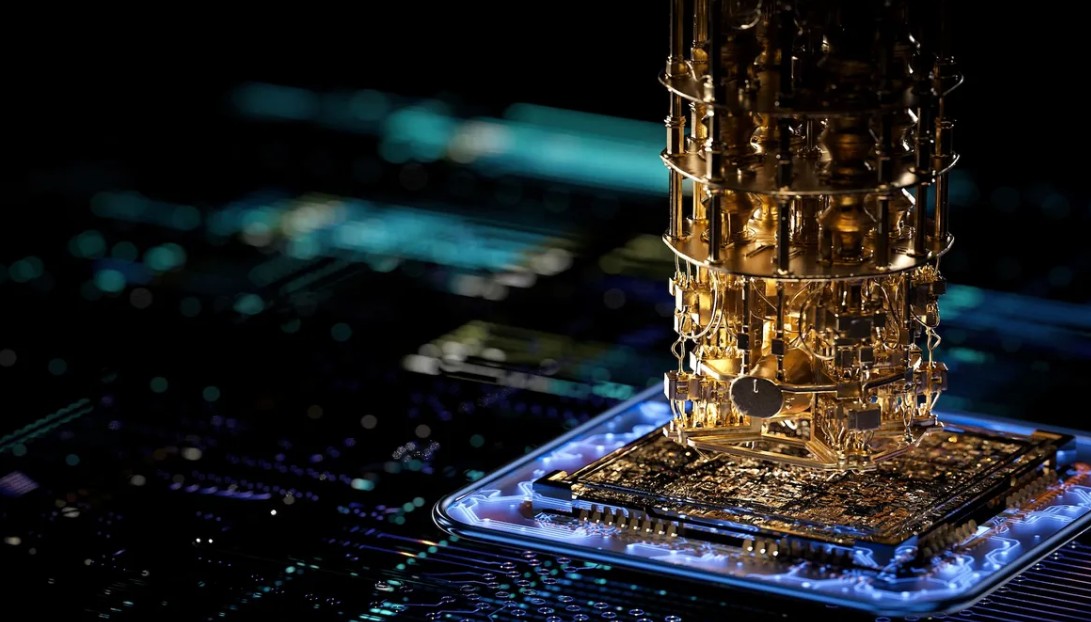
Scientists at Princeton University have developed a new type of superconducting quantum bit (qubit) that holds quantum information up to 15 times longer than those used by tech leaders such as Google and IBM, marking a major step toward more reliable quantum computers, tells Live Science. The breakthrough centers on material and fabrication improvements that extend the coherence time, that is, the period during which a qubit can preserve its delicate quantum state before decoherence erases the information, which has been a core challenge in building practical machines.
The team replaced conventional materials and substrates used in superconducting qubits with tantalum grown on ultra-pure silicon. Tantalum, a corrosion-resistant transition metal known for having fewer defects, helps the qubits stay coherent longer. Using this approach, researchers achieved coherence times as long as 1.68 milliseconds, compared with typical commercial superconducting qubits in Google’s and IBM’s processors that lose coherence much sooner. That improvement has ripple effects, giving quantum processors more time to complete operations and reducing error rates.
Longer coherence expands what quantum systems can realistically compute. When qubits remain stable longer, they can perform more complex calculations before errors accumulate, improving the chances of solving meaningful problems. In tests, this new design worked in systems with up to 48 qubits, demonstrating the concept beyond individual components.
Replacing the traditional sapphire substrate with high-resistivity silicon was key. Silicon is already widely used in classical chip manufacturing, and its compatibility may help bridge quantum and conventional fabrication methods. The resulting qubits are still similar enough to existing industry designs that they could, in principle, be integrated into processors like Google’s Willow, potentially boosting performance dramatically.
Despite these gains, challenges remain. Tantalum is relatively scarce, and researchers must validate the approach at larger wafer scales needed for commercial production. Still, this advance dents one of quantum computing’s biggest hurdles by giving qubits much longer lifespans, making reliable, scaled-up quantum machines more attainable.
