

A major assumption about quantum computing is being revised: breaking modern encryption may require far fewer qubits than previously believed. The Live Science article reports that researchers now estimate powerful quantum computers could compromise widely used cryptographic systems with roughly 10,000 qubits, instead of the millions once considered necessary.
The shift comes from improved methods for running Shor’s algorithm, a quantum approach capable of factoring large numbers and solving discrete logarithms, which underpin encryption schemes such as RSA and elliptic curve cryptography. Earlier projections assumed massive overhead from error correction, inflating qubit requirements into the millions. The new study shows that advances in architecture and coding efficiency could dramatically reduce that burden.
According to the findings, a system with about 11,961 qubits could theoretically run Shor’s algorithm at a scale relevant to real-world encryption. Even smaller ranges, between 10,000 and 26,000 qubits, might break elliptic curve encryption in about 10 days. A machine with 11,000 to 14,000 qubits could crack RSA-2048 encryption in under three years, while larger systems could reduce that time further.
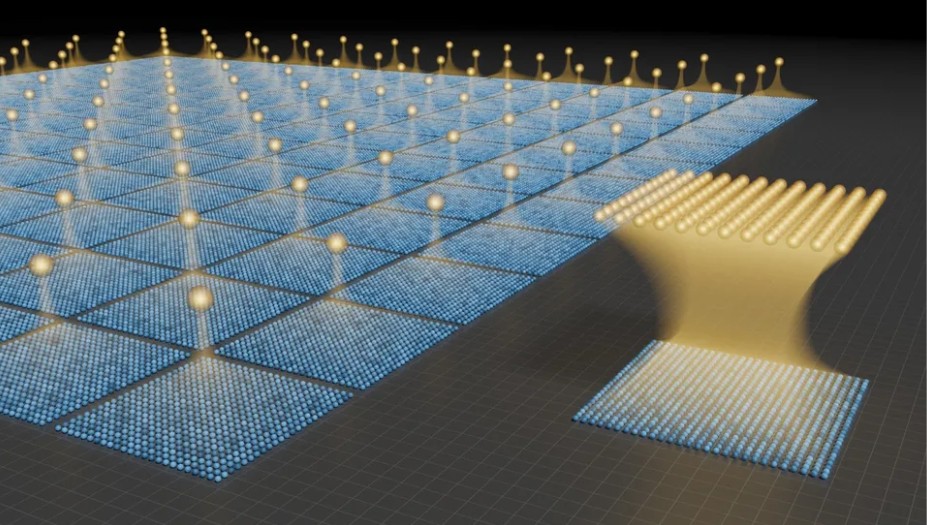
The study also explores parallelized quantum architectures. A system with approximately 102,000 qubits, using parallel processing, could break RSA-2048 encryption in just 97 days. This highlights that not only the number of qubits but also how they are organized and used can significantly impact performance.
Despite these advances, such machines do not yet exist. Current quantum computers operate with far fewer qubits and still face major engineering challenges, including error rates and stability. The research remains theoretical, outlining what may be possible rather than what is currently achievable.
Even so, the implications are significant. If the threshold for breaking encryption is lower than expected, the timeline for quantum threats may accelerate. The findings reinforce the urgency of developing and deploying quantum-resistant cryptography before these capabilities become practical.
