

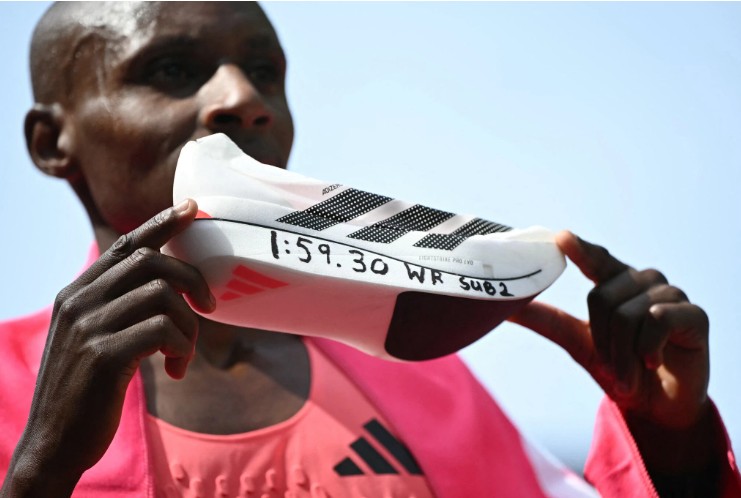
From the barefoot run of Pheidippides in ancient Greece to record-breaking marathon performances today, running footwear has undergone a dramatic transformation. The modern milestone came at the London Marathon, where elite runners broke the two-hour barrier and set records wearing ultralight shoes weighing just 97 grams, tells The New York Times (full article available to subscribers).
The pursuit of lighter shoes has driven innovation for centuries. Research has shown that even small increases in weight can slow runners measurably, reinforcing the idea that minimizing mass improves performance. Early footwear, made from leather, wood, or metal, prioritized durability but came at the cost of speed and comfort.
The introduction of rubber soles in the 19th century marked a turning point, offering flexibility, grip, and quieter movement. By the early 20th century, brands such as Converse and Keds popularized simple canvas-and-rubber designs. Competitive running soon demanded more specialized solutions, leading to the invention of spiked shoes in the late 1800s, which improved traction and acceleration.
Further breakthroughs emerged in the 1970s, when innovations such as Nike’s waffle sole improved grip while reducing weight. Around the same time, ethylene-vinyl acetate foam introduced cushioning that absorbed impact more effectively than traditional materials. This balance between comfort and performance became central to modern shoe design.
Subsequent decades brought air cushioning, gel inserts, and customized fit systems, each refining shock absorption and energy return. The latest generation of “super shoes” combines lightweight foam with carbon-fiber plates that store and release energy, effectively propelling runners forward. These designs have sparked debate over fairness but remain within competitive regulations.
Today’s ultralight racing shoes represent the culmination of centuries of experimentation. By blending advanced materials with biomechanical insight, they bring runners closer to the efficiency of barefoot movement while enhancing speed and endurance. The evolution reflects a continuous push toward the ideal balance of lightness, support, and performance.
