

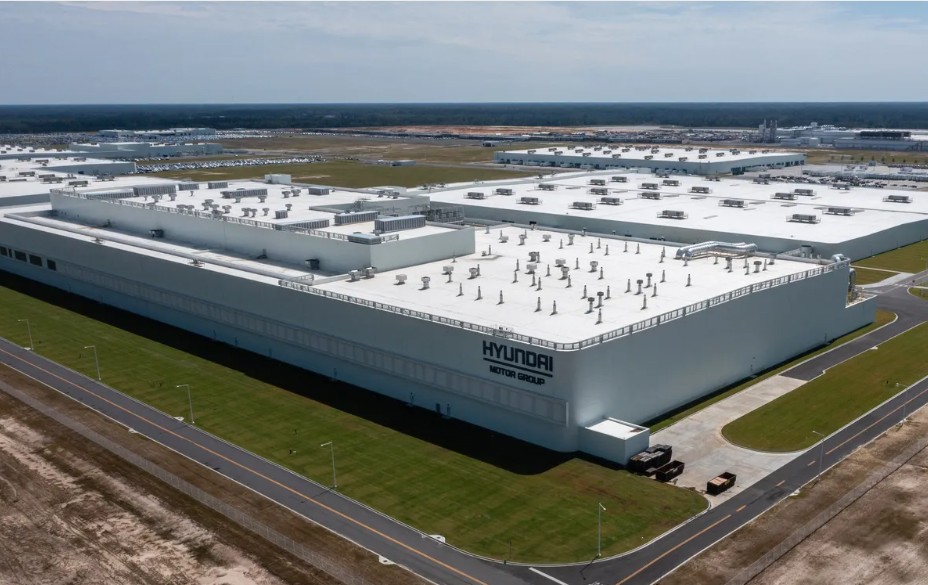
Hyundai’s sprawling Metaplant in Ellabell, Georgia, was intended as a marquee symbol of American EV manufacturing. Backed by a $7.6 billion investment, the plant’s full capacity promises 500,000 electric vehicles annually. It’s central to Georgia’s ambition to become a U.S. hub for electric mobility.
But on September 4, federal agents from Immigration and Customs Enforcement (ICE) descended on the facility, arresting about 475 workers. More than 300 of them were South Korean contractors, many of whom had been helping construct and train for the battery factory. The arrests sparked outrage, diplomatic tension, and questions about how the United States treats foreign labor tied to its industrial goals, tells IEEE Spectrum.
Hyundai, which sources batteries from a joint venture with LG, said that despite the raid, EV and Ioniq 5 production continued. Still, the opening of the battery plant was delayed by at least two months. The raid cast a spotlight not just on immigration enforcement, but on the mixed signals emanating from U.S. policy under a presidential administration that has praised domestic manufacturing while also enforcing aggressive immigration measures.
The incident exposed contradictions. While one arm of government is pushing for onshore production of EVs and batteries, another is deploying workplace raids that unsettle foreign expertise critical to those ambitions. For example, programs such as the Inflation Reduction Act reward investment in U.S. factories, but if those factories can’t rely on skilled international labor, their viability is weakened.
Labor conditions in the plant were also under scrutiny. Reports of worker deaths, safety lapses, and unauthorized labor surfaced in media coverage, fueling concern among unions and regulators. Meanwhile, visa policy and enforcement are now central to debates over how scalable and sustainable U.S.-based EV manufacturing can be without stable access to specialized labor.
The raid at Hyundai’s Metaplant was more than a single enforcement action. It illuminated deeper tensions in industrial strategy, labor policy, and how the United States plans to compete in the green manufacturing race.
