

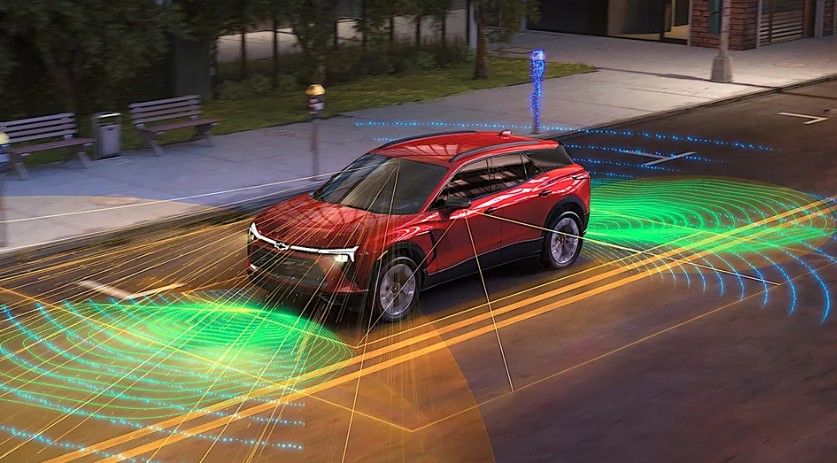
A new study from the University of Michigan Transportation Research Institute (UMTRI) and General Motors adds substantial real-world evidence to the growing case for advanced driver assistance systems (ADAS), tells Design News. Examining roughly 12 million GM vehicles from model years 2020 to 2024 and matching them with more than 700,000 police-reported crashes across 18 U.S. states, researchers found that several widely available safety technologies dramatically reduced both crash frequency and injury severity.
The most striking result involved backing crashes. Vehicles equipped with a suite of rear safety technologies, including reverse automatic braking, rear cross-traffic alert, rear park assist, and rear-view cameras, experienced an 86% reduction in backing collisions. Automatic emergency braking also delivered strong results, cutting rear-end crashes involving injuries by 57%. Front pedestrian braking reduced pedestrian injury crashes by 35%, while lane-keeping assist and lane-change alert produced more modest but still measurable reductions in roadway-departure and lane-change crashes.
The study is notable not only for its scale but also for its methodology. UMTRI used a quasi-induced exposure logistic regression model to compare crash types that ADAS features are designed to prevent against crash categories unrelated to those systems. Researchers also accounted for variables such as vehicle type, weather conditions, driver age, road surface conditions, distraction, fatigue, alcohol involvement, and lighting conditions.
Another important takeaway is that many of these features are no longer limited to luxury vehicles. GM noted that systems such as automatic emergency braking, front pedestrian braking, and lane-keeping assist are now standard on several U.S. models priced below $30,000.
The findings reinforce similar conclusions from organizations such as the Insurance Institute for Highway Safety, suggesting that ADAS technologies are steadily evolving from optional conveniences into foundational safety infrastructure. While debates continue around autonomy and driver dependence, this study points to a quieter but more immediate reality: incremental automation is already reducing harm on public roads today.
